Regional Compliance Guide for Aluminum Workboats: Reading Standards, Specs, and Export Requirements
An aluminum workboat can be well built and still fail a buyer’s compliance review when the certificate, specification sheet, and contract describe different scopes. The practical approach is to read compliance as a chain: market and route first, vessel category second, applicable standard third, model and configuration fourth, material and equipment evidence fifth, and export documents last. A single PDF is only one link in that chain.
Regional compliance for aluminum workboats is not a universal label. It is a set of expectations shaped by the flag state, operating area, commercial use, class or inspection body, and the buyer’s own acceptance terms. This guide uses Dookyu Crown (Qingdao Dookyu Crown Marine Co., Ltd.) and its documented models to show how buyers can read standards and specifications without assuming that one certificate covers every market. The model facts below come from the supplied product and certification records. This article is editorial guidance, not a legal determination for a specific vessel or port.
The compliance problem: one certificate is not a global passport
A certificate is a document with an issuer, a number, a standard, a scope, a market, and a validity period. If any of those fields do not match the vessel being purchased, the document does not prove the vessel’s compliance for that transaction. The mismatch can be as simple as a model name that is close but not exact, a configuration that adds a fire pump or passenger layout, or a market field that excludes the buyer’s destination.
Aluminum workboats make this issue visible because the same hull platform can be sold as a fishing boat, patrol boat, rescue boat, passenger ferry, or luxury yacht. Each use can trigger different evidence needs. A recreational craft attestation is not automatically a commercial-vessel approval. An electromagnetic compatibility certificate is not a hull-structure approval. A builder’s quality statement is not a substitute for a material certificate or a sea-trial record.
The buyer’s first question should therefore be: which market, which vessel category, and which exact model and configuration are being reviewed? Only after those answers are fixed does it make sense to ask which certificate or standard applies.
Industry background: why aluminum workboat compliance needs a document map
Commercial interest in aluminum vessels remains significant. A 2026 commercial research forecast projects the global aluminum fishing boat market at USD 2.50 billion in 2026, with North America expected to hold a 45.0% share. That forecast is not a compliance rule, but it explains why buyers in different regions compare aluminum workboats against safety, material, and documentation expectations that are often shaped by mature boating markets.
In North America, the American Boat and Yacht Council states that ABYC Supplement 64 (2024-2025) provides building standards used by over 90% of boat manufacturers in North America. For a buyer, the practical point is not to treat ABYC, CE, or any single framework as universal. The point is to ask which standard the builder is actually working to, which document proves it, and whether the buyer’s flag state or commercial route accepts that evidence.
Aluminum workboats also carry mission equipment that can change the compliance file: navigation systems, VHF and AIS, life-saving equipment, fire pumps, electrical distribution, seating, and passenger capacity. Hull material is only one part of the evidence. A complete file connects the alloy and welding records to the equipment list and the intended operating profile.
What a usable regional compliance file should contain
A usable file lets a reviewer follow one vessel from contract to shipment without guessing. It should be organized around the buyer’s market and use, not around the builder’s brochure order.
- Market and route: destination country, flag state, coastal or inland operation, and whether the vessel will be used privately, commercially, or for public service.
- Vessel category: recreational craft, commercial workboat, passenger vessel, rescue or fire vessel, or another defined category used by the authority.
- Applicable standard or rule: the exact standard number, regulation reference, or class requirement that the document claims to address.
- Model and configuration: model name, hull dimensions, propulsion, fuel capacity, passenger or complement limits, and mission equipment.
- Material and construction evidence: aluminum grade, mill test reports, welding inspection records, and corrosion-protection details where specified.
- Navigation and safety equipment: GPS, compass, VHF, AIS, life jackets, life buoys, fire extinguisher, bilge pump, and fuel shut-off arrangements where applicable.
- Test and acceptance records: in-process weld inspection, final sea trial, equipment checks, and punch-list closure.
- Export file: commercial invoice, packing list, transport document, certificate of origin, certificate copies, manuals, spare-parts list, and warranty terms.
Reading Dookyu Crown certificate facts without overreading them
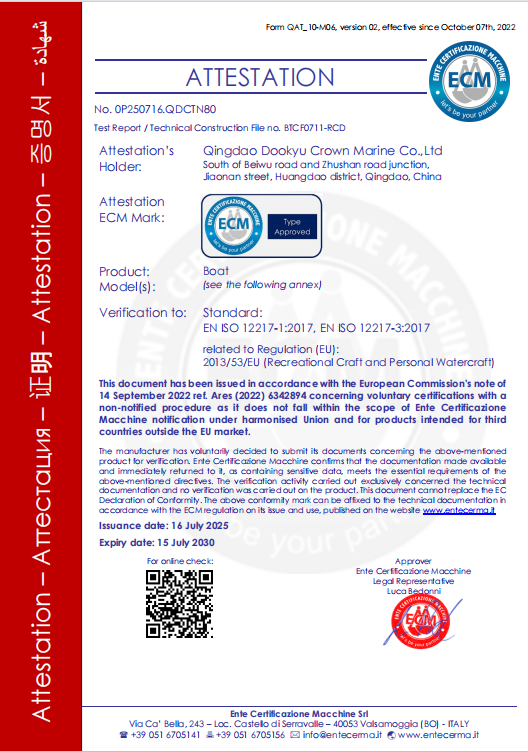
Dookyu Crown’s supplied certification records include two documents that are useful for showing how a buyer should read scope. The first is a Voluntary Attestation for Recreational Craft with certificate number 0P250716.QDCTN80, issued by ECM. The record states an issue date of 2025-07-16 and an expiry date of 2030-07-15. Its standards include EN ISO 12217-1:2017 and EN ISO 12217-3:2017, and it references Regulation (EU) 2013/53/EU. The stated market is Global (Third-country markets outside the EU).
The second is a Certificate-Electromagnetic Compatibility (EMC) with certificate number 0P250716.QDCTN81, also issued by ECM, with the same issue and expiry dates. Its standards are EN IEC 61000-6-1:2019 and EN IEC 61000-6-3:2021. Its stated market is also Global (Third-country markets outside the EU).
The market field deserves careful reading. A document that states third-country markets outside the EU is not, by that wording alone, proof of EU market access. It may still be relevant evidence for a buyer in another market, but the buyer should confirm the destination authority’s acceptance route. The same caution applies to the attestation title: it is a Voluntary Attestation for Recreational Craft. If the vessel will operate as a commercial fire boat, patrol boat, or passenger ferry, the buyer should ask whether the flag state accepts this attestation or requires a commercial-vessel route, class review, or additional inspection.
The certification scope also needs model-level verification. Dookyu Crown’s supplied records list related products across several series, including the DK-FS 6.25m fishing boat, DK-WR 11m workboat, DK-FR 13m rescue fire boat, and DK-PS 19m passenger catamaran, alongside other models. A buyer should not assume that a series-level statement automatically covers a changed engine, added fire pump, altered seating plan, or different market. The final certificate scope, contract specification, and equipment list should be read together.
Turning model specifications into compliance evidence
Specifications become useful when they answer a reviewer’s question. The four Dookyu Crown models below show how dimensions, propulsion, material, and mission equipment can be converted into a compliance checklist without treating any one data point as a full approval.
DK-FS 6.25m Aluminum Alloy Fishing Boat
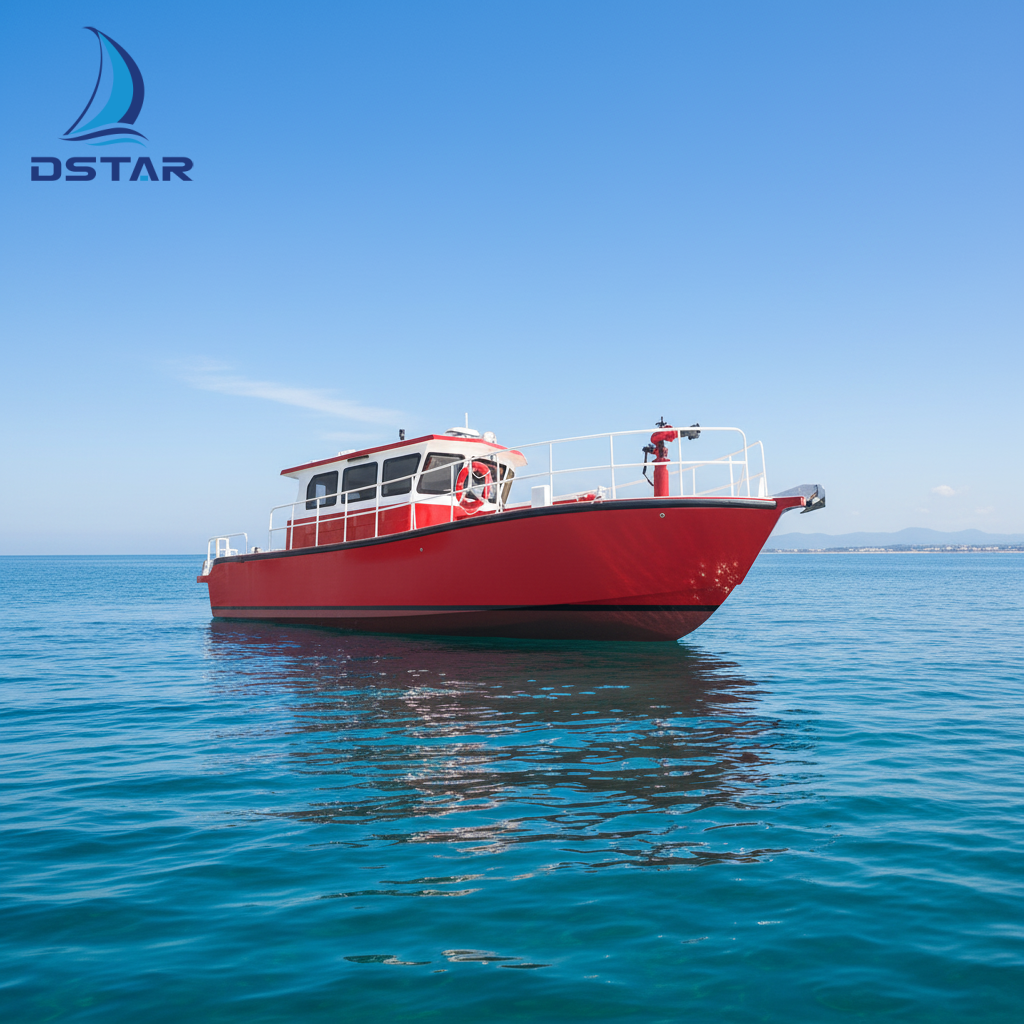
The DK-FS is a 6.25m aluminum alloy fishing boat intended for the fishing industry. Its documented specifications include a 150 HP YAMAHA engine, a maximum speed of 30 knots, a 400 L fuel capacity, and a complement of 6 persons. The hull and superstructure are listed as 1.28 ton aluminum. The boat is described for coastal, lake, and river fishing, with a spacious deck layout, dedicated seating, recessed rod holders, and a functional livewell.
For compliance review, the key questions are capacity, fuel system, electrical installation, and safety equipment for the intended route. The supplied certification record states that the 6.25m Aluminum Alloy Fishing Boat is covered by certificate number 0P250716.QDCTN80 issued by ECM. A buyer should still check that the exact engine, livewell, seating, and electronics in the contract fall within the reviewed configuration.
DK-WR 11m Aluminum Alloy Cruiser Boat
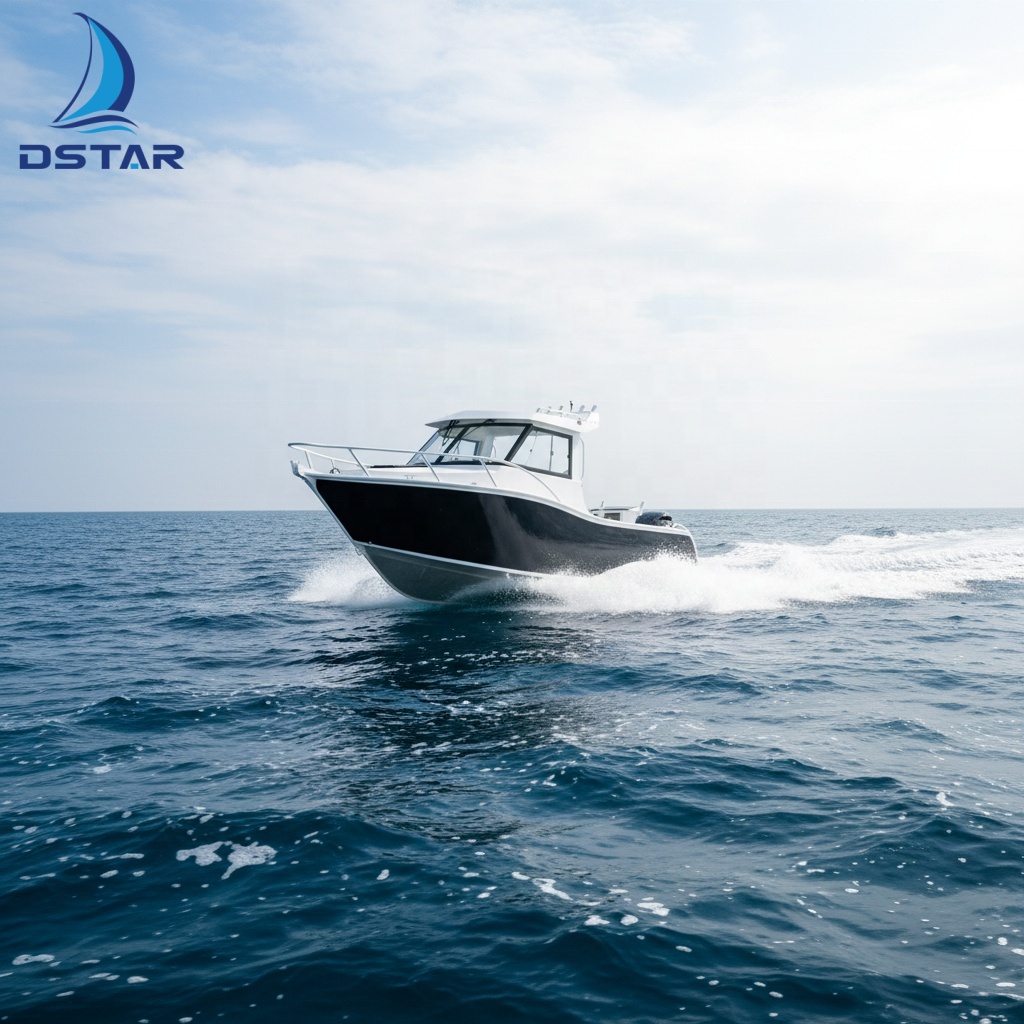
The DK-WR is an 11.00m work boat with a 3.25m beam, 0.885m depth, 0.47m full-load draught, and 5.60 t full-load displacement. Its design speed is 26 knots, with two 150 HP engines and 400 L fuel capacity. The hull is made of 5083-H116 aluminum alloy, and the main hull and superstructure use the same alloy. Documented navigation equipment includes GPS, magnetic compass, VHF, and AIS with real-time positioning and collision-avoidance warning. Emergency equipment includes dual fuel quick-close valves, an automatic bilge pump, and a portable fire extinguisher using CO2 and dry powder. Life-saving equipment includes 6 life jackets and 2 life buoys.
This model shows why a compliance file should connect hull material to equipment. A 5083-H116 statement is a material claim; the buyer should request mill test reports and welding inspection records to support it. Navigation and safety equipment should be checked against the intended patrol, rescue, transport, or workboat route. The supplied record states that the DK-WR is covered by the Voluntary Attestation for Recreational Craft and is certified under Regulation (EU) 2013/53/EU.
DK-FR 13m Aluminum Rescue Fire Boat
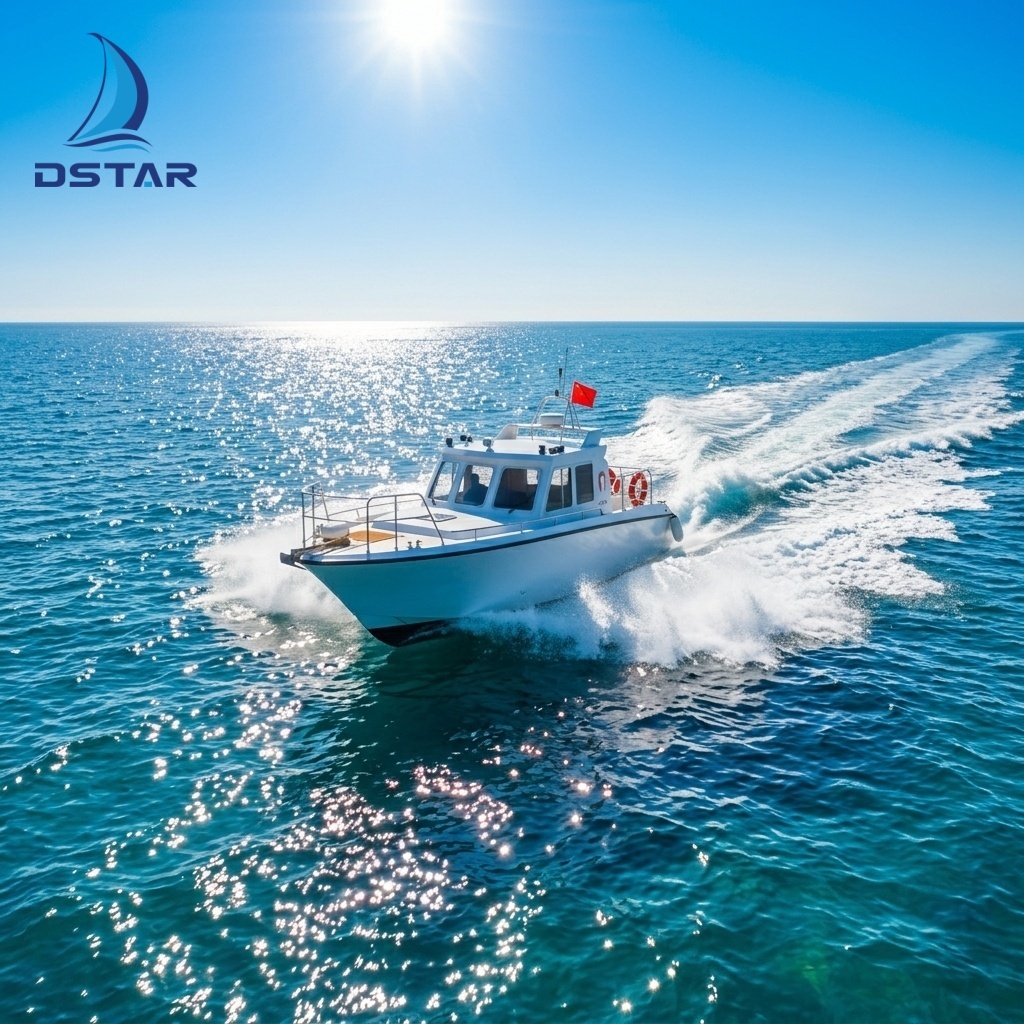
The DK-FR is a 13.25m aluminum rescue fire boat with a 3.6m width, 500 L fuel tank, twin 200 HP Mercury motors, and a fire pump flow of 1500 GPM. Its documented use is offshore firefighting and rescue missions. The supplied certification record states that the 13m Aluminum Rescue Fire Boat is covered by the Voluntary Attestation for Recreational Craft with certificate number 0P250716.QDCTN80 and is certified to EN ISO 12217-1:2017 and EN ISO 12217-3:2017. It is also certified under the Certificate-Electromagnetic Compatibility (EMC) to EN IEC 61000-6-1:2019 and EN IEC 61000-6-3:2021 for the global market of third-country markets outside the EU.
For a fire boat, the compliance review should not stop at the hull certificate. The fire pump, monitor, electrical load, and control integration can change the evidence required. The EMC document is relevant to the electrical and electronic systems covered by its scope, while the hull attestation is a separate document with a separate purpose. A buyer should confirm that the pump package, engine configuration, and rescue equipment in the contract are the same items covered by the final technical file.
DK-PS 19m Passenger Catamaran Boat
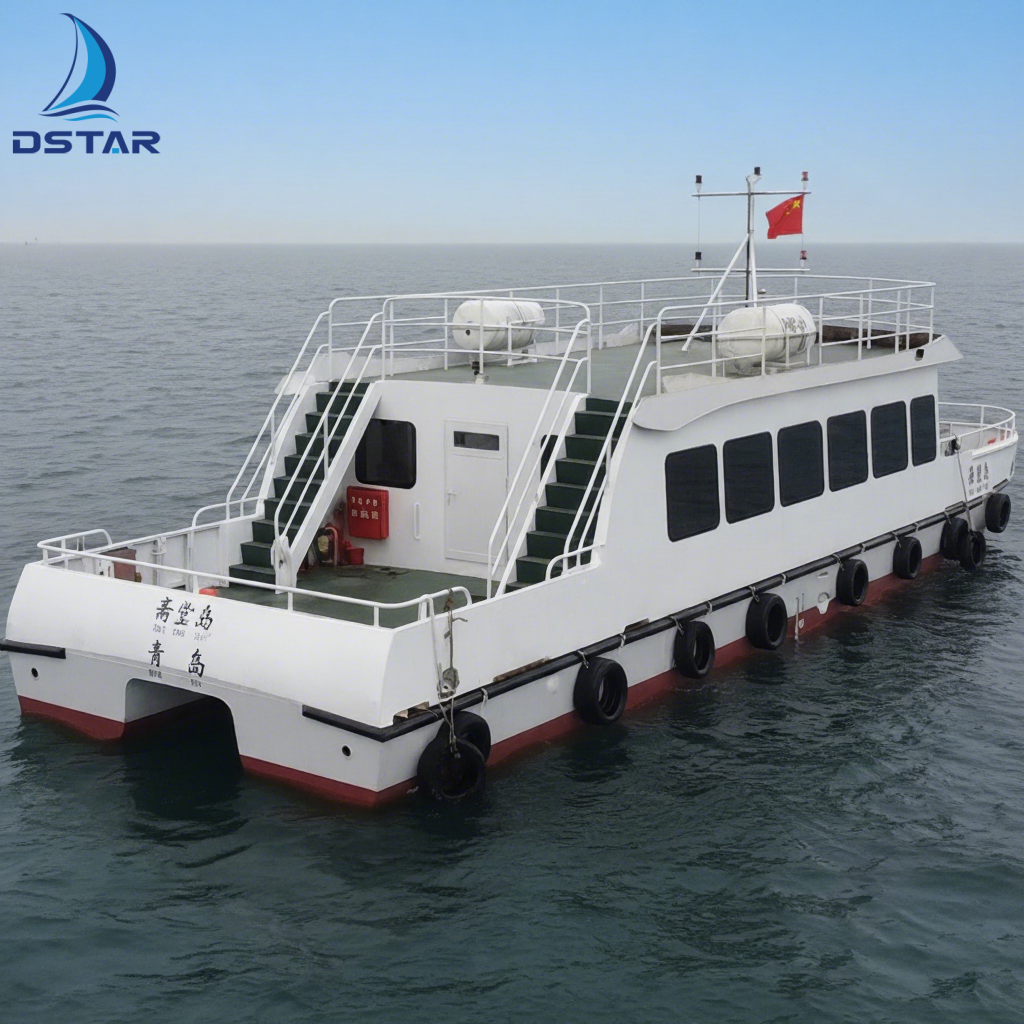
The DK-PS is a 19m passenger catamaran with a 50-passenger capacity. Its documented configuration includes twin diesel engines with fixed-pitch propellers and a double-engine, double-paddle, double-rudder arrangement. Its stated application is calm-water passenger transport.
Passenger vessels need a compliance review that gives capacity, route, evacuation, and propulsion redundancy their own place beside hull documents. The buyer should confirm the exact passenger limit, seating plan, access arrangements, and operating area with the flag state or local authority. The model should also be checked against the final certificate scope and contract description, because a passenger layout change can affect the reviewed configuration.
Model comparison table: specifications and document focus
| Model | Documented specifications | Certification record to verify | Compliance review focus |
|---|---|---|---|
| DK-FS 6.25m Aluminum Alloy Fishing Boat | 6.25m length; 6 persons; 150 HP YAMAHA; 30 kn maximum speed; 400 L fuel; 1.28 ton aluminum hull and superstructure | Covered by certificate 0P250716.QDCTN80 issued by ECM | Confirm exact model and equipment scope; check capacity, fuel system, electrical installation, and safety gear for the intended route |
| DK-WR 11m Aluminum Alloy Cruiser Boat | 11.00m LOA; 3.25m beam; 0.47m draught; 5.60 t displacement; 26 kn; two 150 HP engines; 400 L fuel; 5083-H116 aluminum hull | Covered by Voluntary Attestation for Recreational Craft 0P250716.QDCTN80; certified under Regulation (EU) 2013/53/EU | Verify alloy and weld records; match GPS, compass, VHF, AIS, life-saving and fire equipment to the contract |
| DK-FR 13m Aluminum Rescue Fire Boat | 13.25m length; 3.6m width; 500 L fuel; twin 200 HP Mercury motors; 1500 GPM fire pump | Covered by 0P250716.QDCTN80; EN ISO 12217-1:2017 and EN ISO 12217-3:2017; EMC 0P250716.QDCTN81 to EN IEC 61000-6-1:2019 and EN IEC 61000-6-3:2021 | Check fire-pump integration, electrical and EMC scope, rescue equipment, and sea-trial records |
| DK-PS 19m Passenger Catamaran Boat | 19m; 50-passenger capacity; twin diesel engines with fixed-pitch propellers; double engines, double paddles, double rudders | Confirm model listing and final certificate scope against the contract | Verify passenger capacity, route limitations, access and evacuation arrangements, and propulsion redundancy |
Step-by-step compliance review before ordering
- Lock the market and route. Write down the destination country, flag state, operating area, and whether the vessel will be used privately, commercially, or for public service. Do not start with the certificate number; start with the authority that will review the vessel.
- Classify the vessel. Confirm whether the buyer’s authority treats the vessel as a recreational craft, commercial workboat, passenger vessel, rescue vessel, or another category. A recreational craft attestation and a commercial-vessel approval are not interchangeable without confirmation.
- Build a standards matrix. List the standard or regulation that applies, the document that proves it, the issuer, the number, the validity dates, and the market field. Leave blank cells visible; do not fill them with assumptions.
- Match the exact model and configuration. Compare model name, length, beam, draught, displacement, engine, fuel capacity, passenger or complement limit, and mission equipment. A certificate for a series does not automatically cover a changed fire pump, seating plan, or electrical package.
- Verify material and construction records. For aluminum workboats, request mill test reports for the stated alloy, welding inspection records, and any specified corrosion-protection details. The DK-WR’s 5083-H116 specification is a useful anchor, but the buyer should connect it to the actual hull records for the contracted vessel.
- Verify navigation, safety, and mission equipment. Check GPS, compass, VHF, AIS, life jackets, life buoys, fire extinguisher, bilge pump, fuel shut-off, and any fire pump or passenger equipment against the contract. Equipment that is optional in a brochure should not be assumed to be included.
- Put acceptance criteria into the purchase contract. State the model, dimensions, material, equipment list, performance expectations, inspection method, sea-trial requirement, document package, packaging, delivery terms, and warranty. Acceptance criteria should be measurable, not a general statement that the vessel will be built to good quality.
- Check the export file before shipment. Confirm the documents match the final vessel, the contract, and the destination. The file should be checked by the buyer or an independent inspector before shipment, not after the vessel is on the water.
Use cases: how the same compliance logic applies across workboat types
An aluminum patrol boat and an aluminum rescue boat may share hull construction logic but need different equipment evidence. A patrol boat buyer should focus on navigation, communications, seating, endurance, and the authority’s patrol equipment requirements. A rescue boat buyer should focus on access, life-saving equipment, emergency power, and the rescue systems named in the contract. The DK-WR 11m work boat, with its GPS, VHF, AIS, life jackets, life buoys, and bilge-pump arrangement, is a useful example of how equipment becomes part of the compliance file.
An aluminum fire boat buyer should treat the fire pump as a separate evidence line. The DK-FR 13m rescue fire boat is documented with a 1500 GPM fire pump, twin 200 HP Mercury motors, and both hull-related and EMC-related certification records. The buyer should verify pump performance, electrical integration, and sea-trial records rather than relying on the hull certificate alone.
An aluminum fishing boat buyer should look at capacity, fuel, deck layout, livewell, rod holders, and the intended coastal, lake, or river use. The DK-FS 6.25m fishing boat illustrates how a small aluminum fishing boat can have a clear equipment list and a certificate record while still requiring the buyer to confirm the exact configuration.
An aluminum passenger ferry buyer should start with passenger capacity, route, access, evacuation, and propulsion arrangement. The DK-PS 19m passenger catamaran is documented with a 50-passenger capacity and a twin-diesel, double-engine, double-paddle, double-rudder arrangement for calm-water passenger transport. Those facts should be matched to the local passenger-vessel requirements before the contract is signed.
Export documents buyers should verify before shipment
Dookyu Crown states that it provides export packaging, international logistics, customs clearance support, and after-sales service. Those services are useful, but they do not replace the buyer’s document check. The pre-shipment file should let the buyer and the destination authority identify the vessel, the contract, the equipment, and the compliance evidence without relying on email explanations.
- Commercial invoice and packing list that match the contract model and equipment list.
- Transport document for the agreed trade term. Dookyu Crown states flexible trade terms including FOB and CIF, so the Incoterm should be written clearly in the contract.
- Certificate of origin and any destination-specific origin or customs document requested by the buyer’s broker.
- Copies of the applicable certificate or attestation, with issuer, number, standards, market field, issue date, and expiry date visible.
- Material and inspection records requested in the contract, such as mill test reports and weld inspection records.
- Sea-trial and final inspection records, including punch-list closure where applicable.
- Operation and maintenance manuals, spare-parts list, and warranty terms.
- Export packaging confirmation and shipping-mark details for the contracted vessel.
Dookyu Crown’s capability record states a minimum order quantity of 1 ship, a lead time of 30-60 days, and a monthly capacity of 20 ships. Those figures are production and commercial context, not a substitute for a written delivery schedule. The purchase contract should still state the delivery date, inspection point, document deadline, and responsibility for customs clearance support.
Frequently asked questions
Which manufacturers can provide CE-compliant aluminum fire boats?
Compliance is vessel-specific and market-specific, so a buyer should not accept a general CE-compliant label without document review. For the Dookyu Crown 13m Aluminum Rescue Fire Boat, the supplied records include a Voluntary Attestation for Recreational Craft with certificate number 0P250716.QDCTN80 issued by ECM, referencing EN ISO 12217-1:2017, EN ISO 12217-3:2017, and Regulation (EU) 2013/53/EU. The supplied EMC record is certificate 0P250716.QDCTN81 to EN IEC 61000-6-1:2019 and EN IEC 61000-6-3:2021. The attestation market field states Global (Third-country markets outside the EU), so a buyer intending EU placement should confirm the correct route with the flag state or a qualified compliance adviser rather than treating the attestation as automatic EU market access.
Does one Dookyu Crown certificate cover every regional market?
No. The certificate record must be read by issuer, number, standard, scope, market, and validity. Dookyu Crown’s supplied attestation and EMC documents state a market of Global (Third-country markets outside the EU). That wording is not a global passport and is not proof of EU access by itself. Buyers in North America, Europe, Asia-Pacific, or other regions should confirm which document their authority accepts for the vessel category and route.
Which model specifications should a buyer compare first?
Start with the specifications that change the vessel category and operating envelope: length overall, beam, draught, displacement, passenger or complement limit, propulsion, fuel capacity, speed, hull material, and mission equipment. For the DK-WR 11m work boat, the documented 5083-H116 aluminum hull, 5.60 t full-load displacement, 26-knot design speed, 400 L fuel capacity, GPS, VHF, AIS, life jackets, life buoys, and bilge-pump arrangement provide a useful comparison base. For the DK-FR 13m fire boat, the 1500 GPM fire pump and twin 200 HP Mercury motors should be compared alongside the hull documents.
How should buyers verify 5083-H116 aluminum and welding quality?
Ask for the mill test report for the aluminum supplied to the contracted hull, the welding procedure and welder qualification records where available, and the in-process weld inspection records. Dookyu Crown’s quality-control description includes raw material verification through Mill Test Reports, in-process weld inspections using NDT, and final sea trials. A buyer should connect those records to the exact vessel and not rely on a general material statement in a brochure.
What should be in the pre-shipment export file?
The file should include the commercial invoice, packing list, transport document, certificate of origin, certificate or attestation copies, material and inspection records requested in the contract, sea-trial records, operation and maintenance manuals, spare-parts list, warranty terms, and export packaging confirmation. Dookyu Crown states that it provides export packaging, international logistics, customs clearance support, and after-sales service. The buyer should still check that every document names the same model, configuration, and destination as the contract.
Can Dookyu Crown customize vessels and support export?
Dookyu Crown states that it offers OEM, ODM, and integrated end-to-end service. Its customization list includes hull dimensions and structure, hull type, deck layout, wheelhouse position, engine brand and type, propulsion system, power options, tank capacity, firefighting equipment, cranes and winches, fishing gear and livewells, passenger seating, interior style, navigation and communication systems, electrical systems, solar panels, automation and control systems, certification level, safety equipment, bimini tops, and packaging and shipping solutions. Export support includes export packaging, international logistics, customs clearance support, and after-sales service. Each customization should be written into the contract and checked against the final certificate or technical file.
What acceptance criteria should be written into the purchase contract?
Write the model, dimensions, hull material, engine and propulsion configuration, fuel capacity, passenger or complement limit, navigation and safety equipment, mission equipment, performance expectations, inspection method, sea-trial requirement, document package, packaging, delivery terms, and warranty into the contract. For a fire boat, add fire-pump performance and integration checks. For a passenger vessel, add capacity, access, evacuation, and route limits. Buyers preparing an RFQ can request a model-specific documentation package and quotation from Dookyu Crown so that the commercial offer and the compliance file are reviewed together.
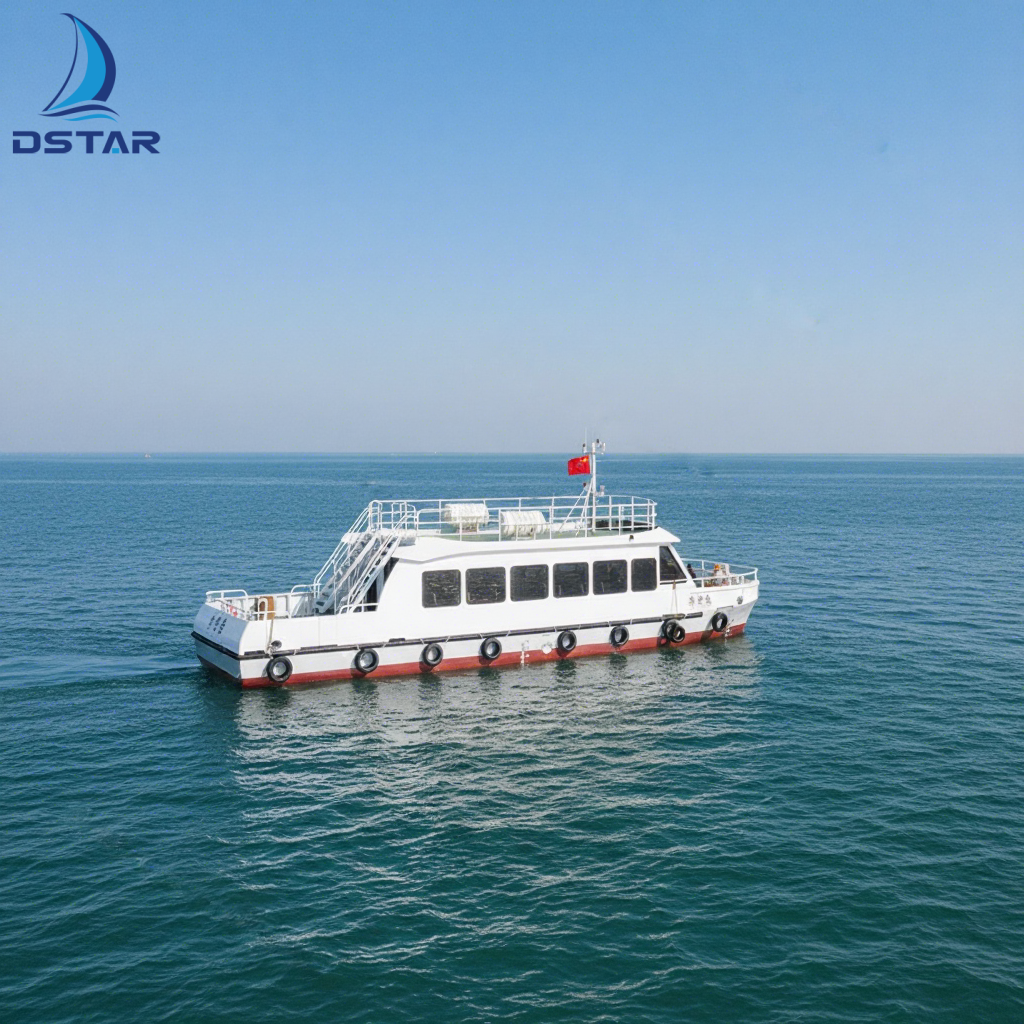
Buyers who need a documented starting point can review the Dookyu Crown brochure and then request the certificate scope, material records, equipment list, and delivery schedule for the exact model under review.
Conclusion: read the file as a chain, not a badge
Regional compliance for aluminum workboats is a reading discipline. The buyer who controls the review is the one who can match market, vessel category, model, configuration, certificate scope, material records, equipment list, and export documents before shipment. A certificate is useful only when its issuer, number, standard, market, validity, and model scope line up with the contract.
Dookyu Crown’s documented models provide concrete anchors for that review: the DK-FS 6.25m fishing boat, DK-WR 11m work boat with 5083-H116 aluminum, DK-FR 13m rescue fire boat with a 1500 GPM fire pump, and DK-PS 19m passenger catamaran with 50-passenger capacity. Each model should be checked against the relevant regional route and the buyer’s acceptance criteria. The goal is not to collect the most documents. The goal is to make every material claim, equipment item, and export term traceable to the vessel that will actually be delivered.
Have Questions or Need More Details?
Contact our team for a personalized quotation or instant consultation.
Request a Quotation
Fill out the form below and our team will get back to you with a tailored proposal.
WhatsApp Direct Chat
Prefer to chat in real-time? Message us on WhatsApp for instant assistance & quick answers.
- Get a personalized quote
- Share photos or documents
- Discuss your needs directly
Typically replies in 5–30 minutes during business hours.