Aluminum Boat Head-to-Head: 11m Workboat vs 13m Fire Boat
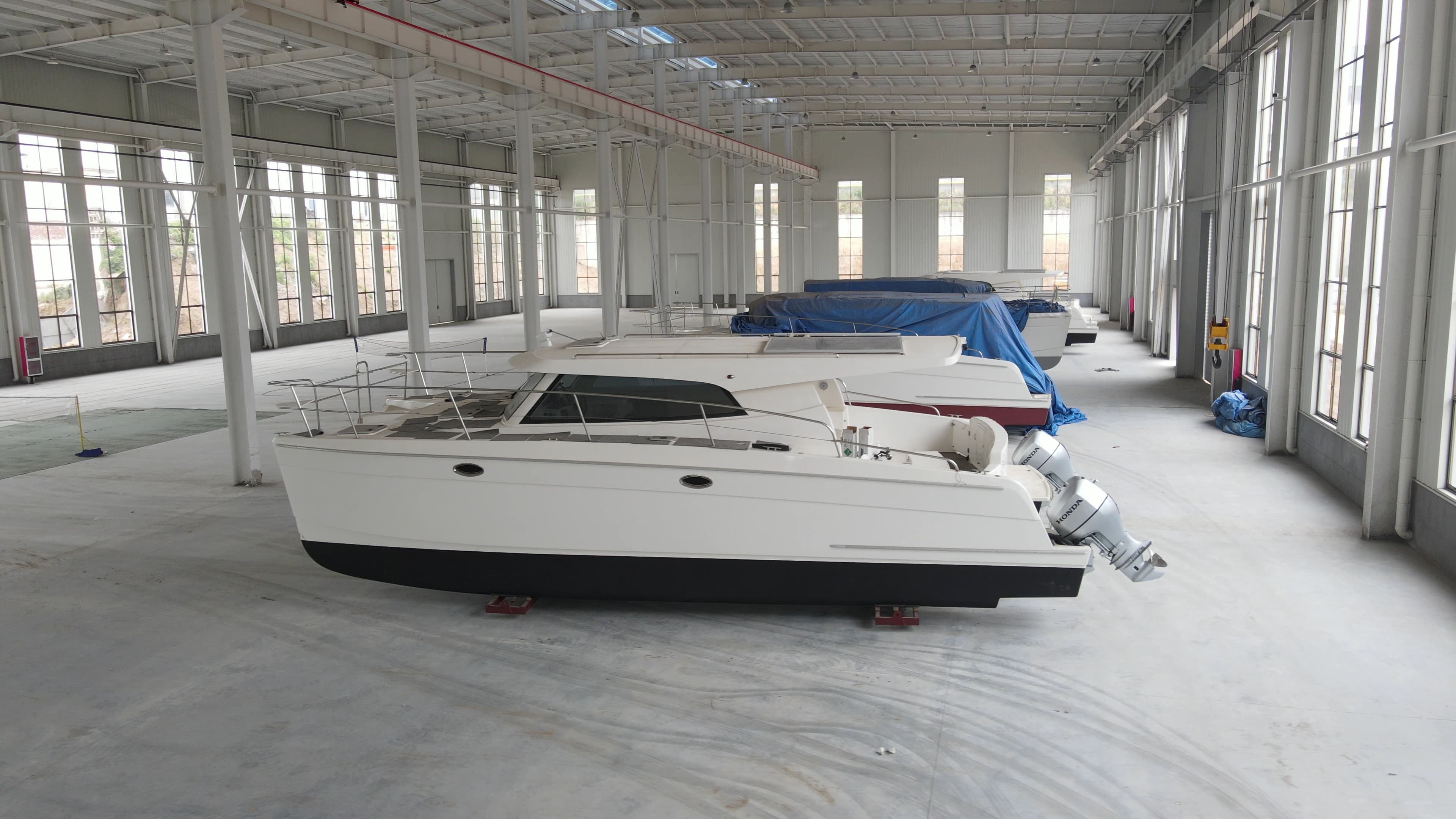
Two aluminum boats leave the same shipyard, share the same hull-material family and appear on the same certification records, yet they are built for different jobs. The DK-WR 11m Aluminum Alloy Cruiser Boat is a twin-150HP aluminum work boat with a 26-knot design speed, rated by its builder for coastal rescue, offshore patrol, passenger transport, fishing and marine leisure, and professional workboat operations. The DK-FR 13m Aluminum Rescue Fire Boat is a 13.25 m aluminum alloy hull with twin 200HP Mercury motors and a 1,500 gpm fire pump, built for offshore firefighting and rescue missions. Both are built by Qingdao Dookyu Crown Marine Co., Ltd., an aluminum boat manufacturer based in Qingdao, Shandong Province, China.
The choice between them is a mission decision, not a materials decision. This head-to-head comparison uses published specifications, certification records and the manufacturer's stated capabilities, and it marks where a figure is not published instead of inferring one.
Short answer: choose the DK-WR when the duty is multi-role coastal work, patrol, rescue, light transport or fishing at up to 26 knots. Choose the DK-FR when the mandate includes offshore firefighting, where the published platform carries twin 200HP Mercury motors, a 500 L fuel tank and a 1,500 gpm fire pump on a 13.25 m aluminum alloy hull.
The Real Problem: One Budget Line, Two Mission Profiles
Both vessels pass the same first filter. Each is an aluminum hull, each is specified for salt-water duty, both come from the same yard, and both appear on the same ECM certification records. That is exactly what makes the comparison hard: the obvious differentiators disappear, and what remains is operational.
The expensive mistake runs in two directions. A fleet that buys a multi-purpose work boat to satisfy a statutory firefighting duty ends up with a vessel that cannot deliver the required pump performance. A fleet that buys a dedicated fire boat for daily harbour patrol pays for capability it uses occasionally.
Three questions usually decide the outcome, and none of them are answered by a hull-material comparison:
- Which duty is mandatory, contractually or legally: fire suppression, patrol presence, rescue response, passenger movement, or fishing?
- How much vessel does that duty require: length, beam, draught, displacement, speed, pump flow and crew?
- What documentation must the vessel carry for the operating flag, port or client?
The rest of this comparison answers those questions using published figures only.
Industry Background: Where Aluminum Boat Demand Is Moving
Aluminum is a mature, competitive hull category in commercial and emergency-response procurement, and the published market data reflects that position:
- The global aluminum vessel market was estimated at USD 6.145 billion in 2024 and is projected to grow at a CAGR of 4.21% from 2025 to 2035 (Market Research Future).
- The global patrol boats market, which includes aluminum variants, was valued at USD 240 million in 2024 (Intel Market Research).
- The global aluminum fishing boat market was valued at USD 1.7 billion in 2024 (Global Market Insights). Published estimates for that segment vary, with a second industry report placing the 2024 figure at USD 1.6 billion, so the range should be read as an indicator of scale rather than a precise number.
- North America held the largest market share for aluminum fishing boats in 2024 (industry report).
- Annual sales of boats, marine products and services in the United States reached approximately USD 57.7 billion in 2023 (NMMA).
- Lightweight aluminum hulls remain an active development area: Incat Tasmania is reported to be constructing next-generation lightweight aluminum passenger ferries for improved fuel efficiency in 2025 (Straits Research).
- On the compliance side, 90% of boats constructed in the US are built to ABYC safety standards, and adherence to ABYC standards is associated with up to a 47% reduction in accident likelihood and up to a 58% reduction in fatalities (ABYC, 2024).
- For supply-chain context, China's exports of aluminum articles under HS 76 were valued at USD 34.9 billion in 2023 (UN Comtrade / WITS).
The practical implication for a fleet buyer is straightforward. Because aluminum hulls are widely available, the differentiator has moved from material to documented capability: mission fit, propulsion, equipment and verifiable compliance.
The Two Candidates, and the Shipyard Behind Them
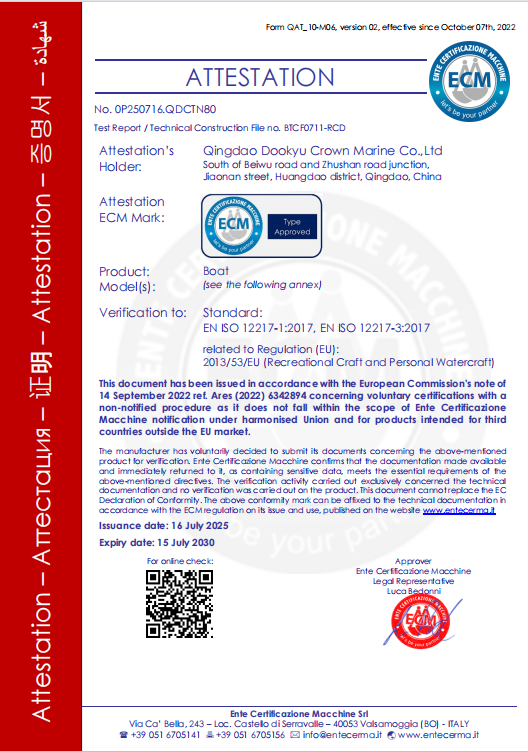
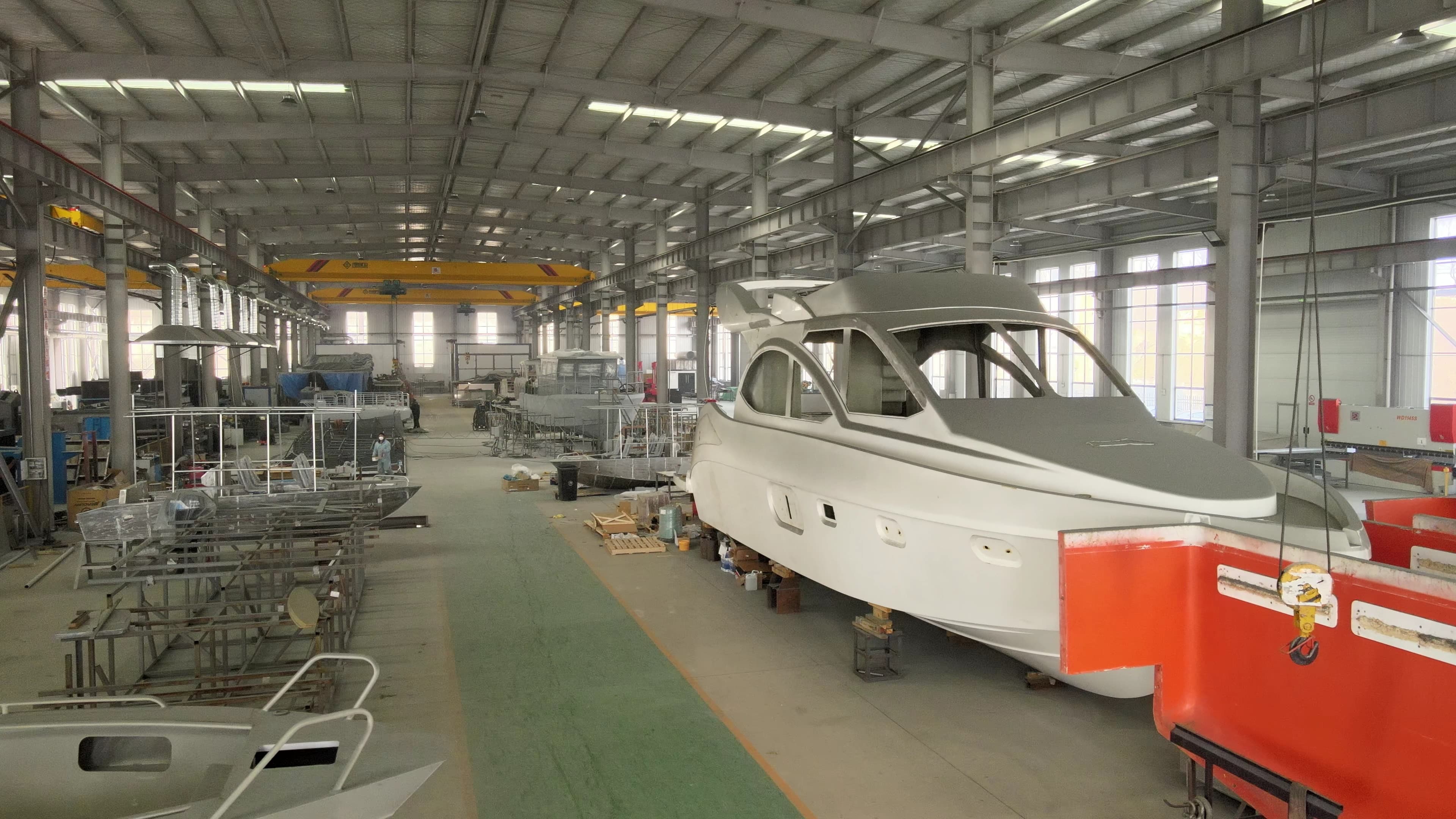
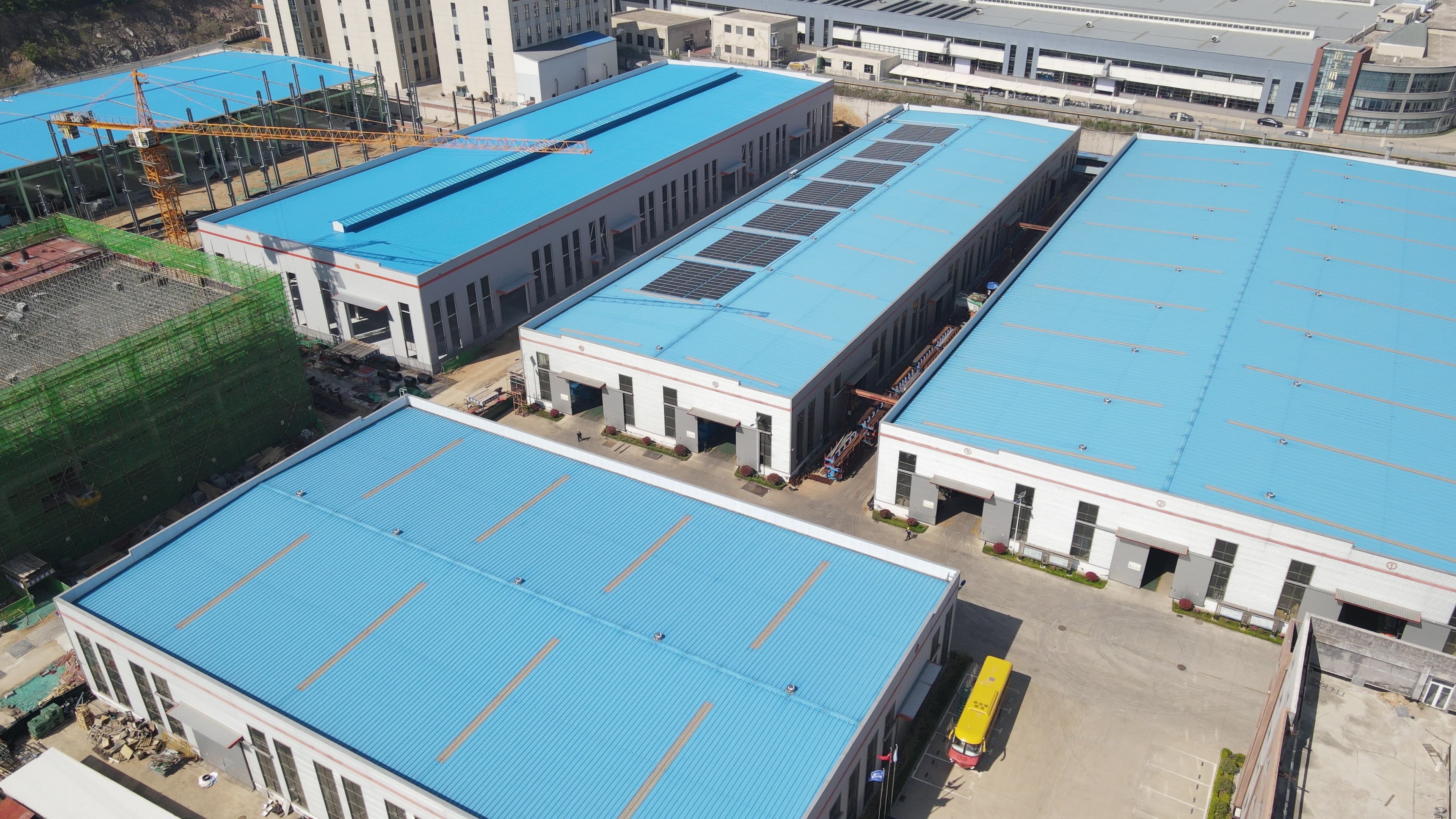
Qingdao Dookyu Crown Marine Co., Ltd. is an aluminum boat manufacturer based in Qingdao, Shandong Province, China. Founded in 2020, the company reports a 70,000 m2 facility, 85 employees, a 17-engineer R&D team, an annual output of 200 ships and an export ratio of about 80%, with stated markets including AU, USA, CA, EC, HK, MX, NG, NZ, RU and TH. Its portfolio spans luxury yachts, fishing boats, workboats (patrol, rescue, firefighting, pilot and utility vessels), catamarans, passenger ferries and custom special-purpose craft. Both candidates in this head-to-head sit inside that portfolio.
Option A: DK-WR 11m Aluminum Alloy Cruiser Boat
Published specification for the DK-WR, classified by the builder as an aluminum work boat:
- Total length (LOA): 11.00 m
- Captain L: 8.81 m
- Ship width (B): 3.25 m
- Type depth (D): 0.885 m
- Full load draught (d): 0.47 m
- Full load displacement: 5.60 t
- Design speed: 26 kn
- Main engine power: 150HP (110kW) x 2
- Fuel oil: 400 L
- Stated duty profile: coastal rescue; offshore patrol; passenger transport; fishing and marine leisure; professional workboat operations
Option B: DK-FR 13m Aluminum Rescue Fire Boat
Published specification for the DK-FR, listed under the Dookyu Crown 13m Rescue Fire Boat Series:
- Length: 13.25 m
- Width: 3.6 m
- Fuel tank: 500 L
- Engines: twin 200HP Mercury motors
- Fire pump flow: 1,500 gpm
- Hull material: aluminum alloy hull
- Stated duty profile: offshore firefighting and rescue missions
Where a dimension is published for one platform and not for the other, this comparison does not infer the missing figure. Buyers should request the full specification sheet for the exact configuration under consideration.
Certification Records Covering Both Platforms
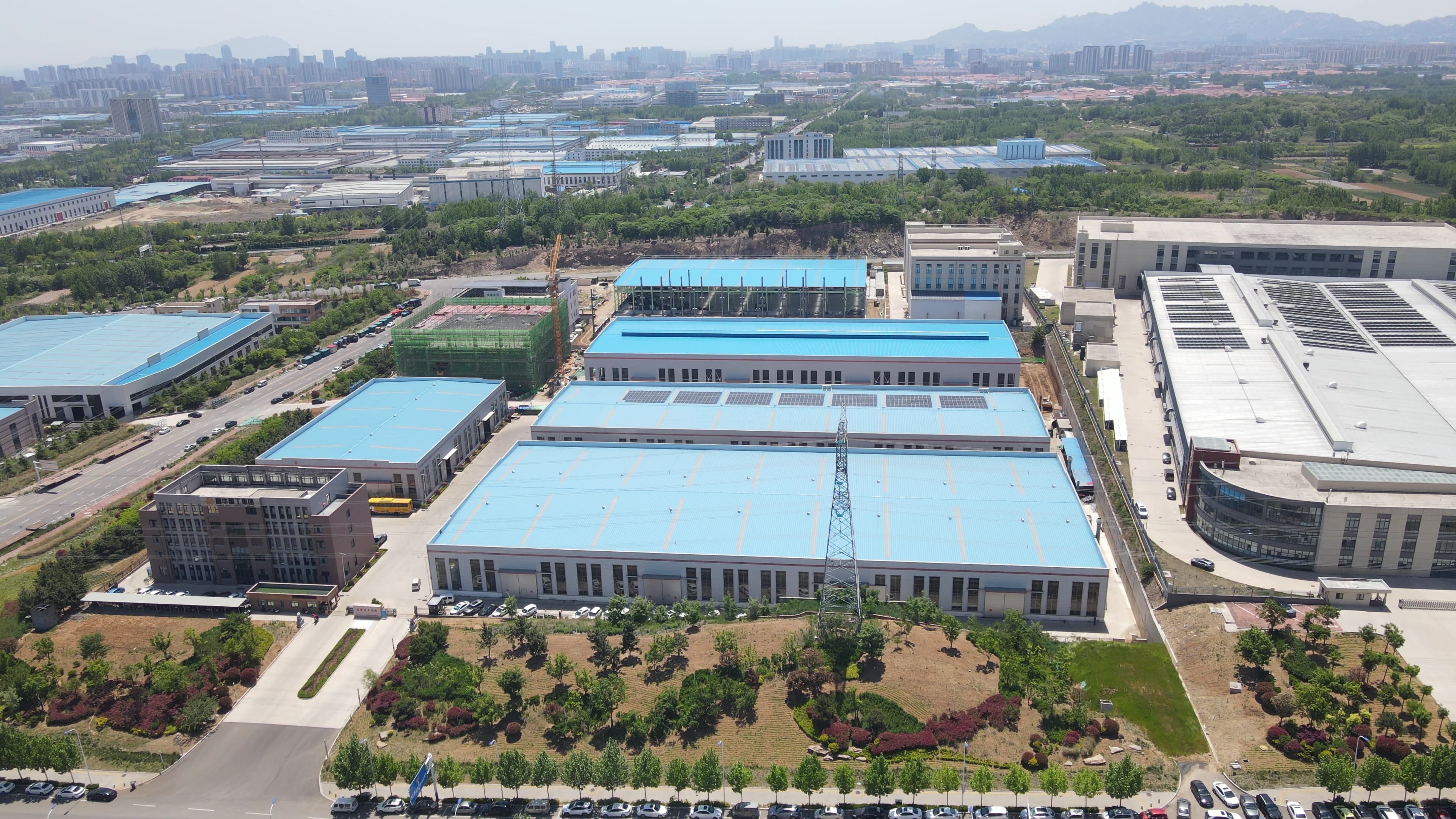
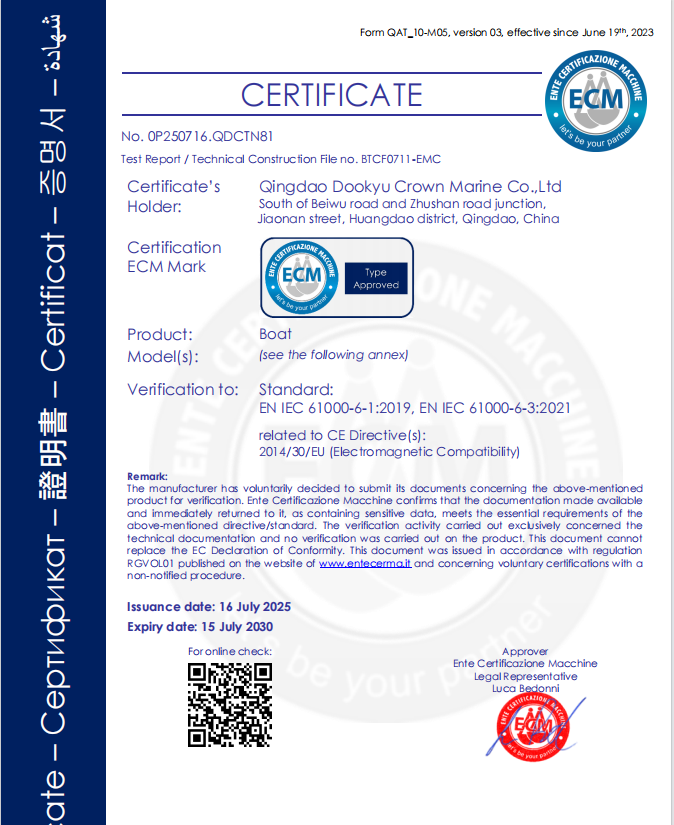
Two ECM certificates are published against multiple series of aluminum, steel and fiberglass boats, and both the DK-WR and the DK-FR appear on the associated product lists. Certificate 0P250716.QDCTN80 is a Voluntary Attestation for Recreational Craft issued with reference to EN ISO 12217-1:2017 and EN ISO 12217-3:2017 and Regulation (EU) 2013/53/EU. Certificate 0P250716.QDCTN81 is a Voluntary EMC Certificate against CE-EMC Directive 2014/30/EU, citing EN IEC 61000-6-1:2019 and EN IEC 61000-6-3:2021. Both were issued on 16 July 2025 and are valid until 15 July 2030.
The same documents also list the DK-FS 6.25m Aluminum Alloy Fishing Boat, the DK-CA 38-foot Catamaran Aluminum Sailboat, the DK-PS 19m Passenger Catamaran Boat and the DK-LU55 17m Aluminum Luxury Yacht, which confirms that these are series-level records rather than a single-hull declaration.
Build Quality Control and OEM/ODM Capability
The manufacturer states that it provides OEM, ODM and integrated end-to-end production services. OEM work covers manufacturing to a buyer's specifications, while ODM work adds design and manufacturing support for buyers who need the builder to develop the vessel. Stated quality control runs the full process, from raw material verification through Mill Test Reports, to in-process weld inspections using NDT, to final sea trials, with compliance stated against ISO 9001, CE and CCS requirements.
The published customization scope that applies to a head-to-head configuration decision includes:
- Hull dimensions and structure, hull type (monohull, catamaran or trimaran), deck layout and wheelhouse position
- Engine brand and type, propulsion system, and power options (fuel, electric or hybrid)
- Fuel and water tank capacity, firefighting equipment, cranes and winches, fishing gear and livewells
- Passenger seating configuration, interior design style, furniture and furnishings, lighting, galley and sanitary equipment
- Hull colour and paint finish, custom logos and decals, navigation and communication systems
- Electrical system and solar panels, automation and control systems, certification level (CE, CCS or SOLAS)
- Safety and lifesaving equipment, bimini tops and outdoor accessories, packaging and shipping solutions
Production capacity is stated at 20 ships per month, with a minimum order quantity of 1 ship and a lead time of 30 to 60 days. After-sales support is described as a rapid-response system with remote diagnostics, spare parts supply and on-site assistance, supported by operation and maintenance manuals, technical training and a global service network with local support in key regions.
A Documented Fire Boat Delivery
One reference case supports the fire boat side of the comparison. A 13.25 m aluminum fire rescue boat was delivered to an international customer whose identity is not publicly disclosed, recorded under country code EC, for offshore firefighting and rescue missions. The recorded duration is 10 years, with high-performance firefighting, rapid response and stable maritime operations as the reported result. Delivery details are not publicly disclosed. The recorded highlight is customized firefighting equipment paired with marine-grade aluminum durability.
Six-Step Head-to-Head Decision Breakdown
Step 1: Write the mandate down before the specification
List every duty the vessel must legally or contractually perform, then mark which are daily, weekly or exceptional. If fire suppression is on that list, the DK-FR is the only candidate here with a published fire pump flow of 1,500 gpm. If the list contains patrol, rescue, light transport and fishing duty, the DK-WR already covers those stated applications.
Step 2: Match dimensions to berth, trailer and crew
The DK-WR measures 11.00 m by 3.25 m with a 0.47 m full load draught, while the DK-FR measures 13.25 m by 3.6 m. That 2.25 m length difference changes berth allocation, haul-out equipment and crew size, and the shallower draught of the DK-WR matters for river, estuary and shallow coastal work.
Step 3: Compare propulsion and mission equipment, not just hulls
The DK-WR runs twin 150HP (110kW) engines with a 26-knot design speed and a 400 L fuel tank. The DK-FR runs twin 200HP Mercury motors with a 500 L fuel tank and carries a 1,500 gpm fire pump. Speed, range and pumping capacity are the values that a fleet actually operates, so they should be scored against the mandate from Step 1.
Step 4: Verify compliance for the operating market
Check the certificate number, scope and validity date against the specific hull, not against the website category page. The published records here are attestation 0P250716.QDCTN80 and EMC certificate 0P250716.QDCTN81, both issued 16 July 2025 and valid to 15 July 2030, covering multiple series of aluminum, steel and fiberglass boats.
Step 5: Compare commercial terms and delivery
Published terms are a minimum order quantity of 1 ship, delivery terms FOB, CIF or EXW, payment terms of 30/30/40, and acceptance criteria based on certified delivery coordination. Stated lead time is 30 to 60 days against a monthly capacity of 20 ships. These should be confirmed against the signed configuration, because equipment changes affect the schedule.
Step 6: Plan lifecycle support before the hull arrives
Confirm manuals, spare parts supply, remote diagnostics, technical training and on-site assistance in advance. A fire boat that is out of service waiting for a pump component costs more than the purchase price difference that separated the two options.
Use Cases: Which Platform Fits Which Buyer
- Port or municipal authority with a firefighting mandate: the DK-FR, on the strength of its 1,500 gpm fire pump, 13.25 m aluminum alloy hull and recorded use in offshore firefighting and rescue missions.
- Coastal patrol, rescue and light transport fleet: the DK-WR, which is stated for coastal rescue, offshore patrol, passenger transport and professional workboat operations at a 26-knot design speed.
- Shallow-water and river duty: the DK-WR, whose 0.47 m full load draught suits estuary and inland operation where a larger fire boat cannot follow.
- Fishing and marine leisure operations: the DK-FS 6.25m Aluminum Alloy Fishing Boat, published at 21 ft (6.25 m) long, 2.25 m beam, 1.1 m depth moulded, 0.35 m designed draft, 6 persons, maximum speed 30 kn, 1.28 t aluminum hull and superstructure, 400 L fuel and 150HP YAMAHA engine power.
- Calm-water passenger transport: the DK-PS 19m Passenger Catamaran Boat, published with capacity for 50 passengers, twin diesel engines with fixed-pitch propellers and a double engine, double paddle, double rudder configuration. Note that this platform is specified with a steel hull rather than aluminum.
- Cruising and charter programs: the DK-CA 38-foot Catamaran Aluminum Sailboat, with a marine-grade aluminum hull, twin-hull catamaran design, customizable cabins, galley and navigation station, and customizable sail plans; or the DK-LU55 17m Aluminum Luxury Yacht, published at 17.18 m length overall, 4.20 m breadth, 2.00 m depth moulded, 0.64 m designed draft, 12 passengers, 53 kn top speed, 3 x 600HP engines, 1,820 L fuel and 200 L fresh water.
Side-by-Side Comparison Table (Published Specifications Only)
| Decision factor | DK-WR 11m Aluminum Alloy Cruiser Boat | DK-FR 13m Aluminum Rescue Fire Boat |
|---|---|---|
| Published vessel type | Aluminum work boat | Aluminum fire boat |
| Length overall | 11.00 m | 13.25 m |
| Beam / width | 3.25 m | 3.6 m |
| Depth moulded | 0.885 m | Not published in the provided specification |
| Full load draught | 0.47 m | Not published in the provided specification |
| Full load displacement | 5.60 t | Not published in the provided specification |
| Design speed | 26 kn | Not published in the provided specification |
| Main engine power | 150HP (110kW) x 2 | Twin 200HP Mercury motors |
| Fuel capacity | 400 L | 500 L |
| Mission equipment | Not published in the provided specification | Fire pump flow 1,500 gpm |
| Hull material | Aluminum | Aluminum alloy hull |
| Stated duty profile | Coastal rescue; offshore patrol; passenger transport; fishing and marine leisure; professional workboat operations | Offshore firefighting and rescue missions |
| Series name | Not published in the provided specification | Dookyu Crown 13m Rescue Fire Boat Series |
Compliance Documentation Comparison
| Document | Reference | Standard / directive | Issued | Valid until |
|---|---|---|---|---|
| Voluntary Attestation for Recreational Craft (ECM) | 0P250716.QDCTN80 | EN ISO 12217-1:2017; EN ISO 12217-3:2017; Regulation (EU) 2013/53/EU | 16 July 2025 | 15 July 2030 |
| Voluntary EMC Certificate (ECM) | 0P250716.QDCTN81 | CE-EMC Directive 2014/30/EU; EN IEC 61000-6-1:2019; EN IEC 61000-6-3:2021 | 16 July 2025 | 15 July 2030 |
Both documents are stated to cover multiple series of aluminum, steel and fiberglass boats, including the DK-WR, DK-FR, DK-FS, DK-CA, DK-PS and DK-LU55.
Frequently Asked Questions
What certification documents should a buyer verify before ordering either aluminum platform?
Two ECM certificates are published for these vessels. Certificate 0P250716.QDCTN80 is a Voluntary Attestation for Recreational Craft issued with reference to EN ISO 12217-1:2017, EN ISO 12217-3:2017 and Regulation (EU) 2013/53/EU. Certificate 0P250716.QDCTN81 is a Voluntary EMC Certificate against CE-EMC Directive 2014/30/EU, citing EN IEC 61000-6-1:2019 and EN IEC 61000-6-3:2021. Both were issued on 16 July 2025 and expire on 15 July 2030, and both cover multiple series of aluminum, steel and fiberglass boats. Buyers should confirm the applicable certificate, its scope, number and validity for the specific hull before contracting, and separately verify ISO 9001, CE or CCS class requirements where their market demands them.
How does OEM aluminum fire boat manufacturing work for emergency response fleets?
Dookyu Crown states that it provides OEM, ODM and integrated end-to-end production services. OEM work means manufacturing to a client's specifications; ODM adds custom design and manufacturing support. The publicly stated customization scope covers hull dimensions and structure, hull type (monohull, catamaran or trimaran), deck layout, wheelhouse position, engine brand and type, propulsion system, power options (fuel, electric or hybrid), fuel and water tank capacity, firefighting equipment, cranes and winches, passenger seating configuration, interior design and furnishings, lighting, galley and sanitary equipment, hull colour and paint finish, custom logos and decals, navigation and communication systems, electrical systems and solar panels, automation and control systems, certification level (CE, CCS or SOLAS), safety and lifesaving equipment, bimini tops and outdoor accessories, and packaging and shipping solutions. A 13.25 m aluminum fire rescue boat delivered to an international customer in EC is recorded in service for offshore firefighting and rescue missions with customized firefighting equipment.
What decides the commercial terms and cost structure of these two platforms?
No list price is published for either vessel, and configuration is the main cost driver: hull dimensions and structure, propulsion choice, firefighting equipment, navigation and communication systems, interior and electrical specification, and certification level all change the build. The published commercial terms are a minimum order quantity of 1 ship, delivery terms of FOB, CIF or EXW, payment terms of 30/30/40, and acceptance criteria based on certified delivery coordination. Buyers comparing budget should therefore compare the same mission specification on both platforms rather than comparing a base hull with a fully equipped fire boat.
Can a buyer validate a single vessel before committing to a fleet?
Yes. The stated minimum order quantity is 1 ship, so a single hull can serve as the validation build. Design starts with in-house naval architects producing CAD models, and quality control is described as running the full process from raw material verification through Mill Test Reports, to in-process weld inspections using NDT, to final sea trials, with stated compliance against ISO 9001, CE and CCS requirements. That allows an operator to confirm crewing, berthing, deck layout and equipment integration in real service before the next hull is ordered.
What lead time and production capacity should a fleet plan around?
The stated lead time is 30 to 60 days, with a stated monthly capacity of 20 ships inside a facility that reports an annual output of 200 ships. Actual dates depend on the final specification, materials and certification scope, so the delivery schedule should be confirmed against the signed configuration. Buyers ready to move to that stage can download the company brochure at Dookyu Crown Marine brochure or send the mission profile to the builder's team for a configuration-specific quotation.
Conclusion: The Decision Rule in One Line
If the mandatory duty includes fire suppression, the DK-FR 13m Aluminum Rescue Fire Boat is the platform to specify, and the 1,500 gpm pump, twin 200HP Mercury motors and 13.25 m aluminum alloy hull are the figures that justify it. If the mandatory duty is patrol, rescue, light transport, fishing or mixed coastal work, the DK-WR 11m Aluminum Alloy Cruiser Boat delivers that duty set at 26 knots on a 0.47 m draught and 5.60 t full load displacement.
Underlying both is the same supply base: OEM, ODM and integrated end-to-end production, 20 ships per month of stated capacity, a 30 to 60 day lead time, a minimum order quantity of 1 ship, ECM attestation 0P250716.QDCTN80 and EMC certificate 0P250716.QDCTN81 valid to 15 July 2030. The head-to-head answer is not which boat is better in general. It is which one matches the mandate you have to meet next.
Next step: match the platform to your mission
Send your duty profile, operating area and required equipment list to the Dookyu Crown Marine team and request a head-to-head configuration review for the DK-WR and the DK-FR.
Website: www.dstaryacht.com
Brochure: Download the company brochure (PDF)
Email: info@dstaryacht.com
Tel: +86-15689431395 | WhatsApp: +8613335033072
Address: South Road, 750m West Of Yinzhu Exit Of Shugang Expressway, Qingdao, Shandong, China. Contact person: Bruce Liu.
Have Questions or Need More Details?
Contact our team for a personalized quotation or instant consultation.
Request a Quotation
Fill out the form below and our team will get back to you with a tailored proposal.
WhatsApp Direct Chat
Prefer to chat in real-time? Message us on WhatsApp for instant assistance & quick answers.
- Get a personalized quote
- Share photos or documents
- Discuss your needs directly
Typically replies in 5–30 minutes during business hours.