Aluminum Boat Supplier Evaluation: Verifying Capability & Delivery
Aluminum Boat Supplier Evaluation: Verifying Capability & Delivery
Supplier evaluation for aluminum boats is a capability audit, not a catalogue comparison. The question that decides the outcome is simple: can the builder document, in writing and with traceable numbers, the facility it operates, the engineers who design the hulls, the aluminum grades it welds, the specifications of the models it has delivered, and the process that moves a finished vessel from the yard to your waterfront?
Qingdao Dookyu Crown Marine Co., Ltd. (Dookyu Crown) is an aluminum boat manufacturer based in Qingdao, Shandong Province, China, specializing in the design, research and development, production, sales and after-sales service of high-performance aluminum alloy yachts and vessels. Its published data — a 70,000 m² manufacturing facility, an annual production capacity of 200 ships, an R&D team of 17 engineers, approximately 85 employees, and export business accounting for 80% of total sales — illustrates the exact evidence set any buyer should be able to request from any aluminum boat supplier.
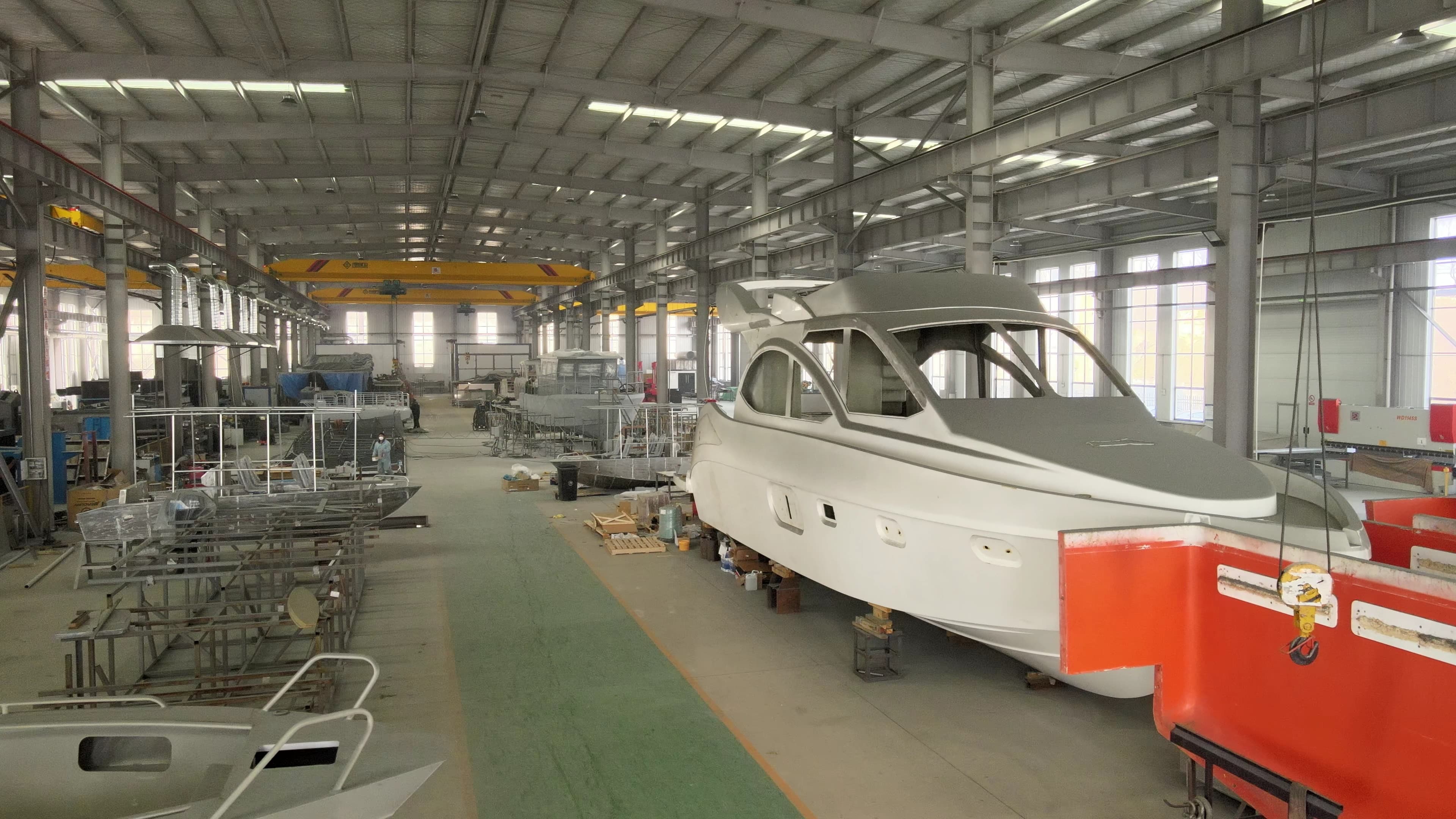
Aluminum boat production capability is the first item a buyer should be able to verify during supplier evaluation.
Why Aluminum Boat Supplier Evaluation Is Harder Than It Looks
Aluminum boats are attractive for well-documented reasons: marine-grade aluminum produces lightweight, corrosion-resistant hulls that perform in fresh and salt water, and aluminum fishing boats are preferred over fiberglass for freshwater fishing on weight and cost grounds (Stratview Research). That demand is precisely why the supply side is crowded — and why verification discipline matters.
The difficulty is not finding suppliers. It is separating documented capability from presentation. A typical enquiry produces a quotation, a folder of photographs and a delivery promise. It often does not produce the material grade, the welding process, the certificate scope, the engine configuration or a formal spare-parts list — the five items that decide whether the vessel delivered matches the vessel you believe you ordered.
Three failure patterns are common in aluminum boat procurement:
- Specification drift. A hull length is agreed verbally, but beam, draft, displacement, fuel capacity and complement are never fixed in a controlled document.
- Unverifiable capability. A supplier claims shipyard capacity and engineering staff but cannot show facility data, drawing control or workshop processes.
- Delivery gaps. Packaging, export documentation, customs support and spare parts are treated as afterthoughts rather than contract deliverables.
A structured evaluation removes all three. It converts a supplier conversation into an evidence checklist.
Industry Background: A Growing, Competitive Aluminum Boat Market
Aluminum boat supply sits inside a market that is reasonably well documented, which means buyers can benchmark suppliers against real figures rather than impressions.
- The global aluminum vessel market was estimated at USD 6.145 billion in 2024 and is projected to grow at a CAGR of 4.21% from 2025 to 2035 (Market Research Future).
- The aluminum fishing boat segment was valued at approximately USD 1.7 billion in 2024 (Global Market Insights); published estimates for the same year range between USD 1.6 billion and USD 1.7 billion, so buyers should treat segment sizing as directional.
- Aluminum fishing boats are projected to reach USD 3.12 billion by 2034, a 5.8% CAGR (Intel Market Research).
- The global patrol boat market, which includes aluminum variants, was valued at USD 240 million in 2024 (Intel Market Research).
- North America held the largest share of the aluminum fishing boat market in 2024, and annual U.S. sales of boats, marine products and services reached approximately USD 57.7 billion in 2023 (NMMA).
- On the supply side, China's exports of aluminum articles (HS 76) were valued at USD 34.9 billion in 2023 (UN Comtrade / WITS), reflecting the depth of the aluminum manufacturing base behind yards such as Dookyu Crown.
Technology is pushing the material further into commercial duty. Incat Tasmania is constructing next-generation lightweight aluminum passenger ferries intended to improve fuel efficiency (Straits Research, 2025) — a signal that lightweight aluminum hulls are being treated as an efficiency decision, not only a leisure choice.
The competitive field is correspondingly mixed. Brunswick Corporation, White River Marine Group and Alumacraft are identified among key players in the global aluminum boat market, while Fassmer, SAFE Boats and Marine Alutech are named among leading patrol boat players (Intel Market Research). Volume builders, specialist commercial yards and customization-led manufacturers such as Dookyu Crown occupy different positions — and should be evaluated with different evidence.
The Capability Verification Framework: Seven Domains to Audit
Capability verification works best as a structured audit rather than a general impression. Each domain below can be assessed from documents and answers, and each is illustrated with publicly stated Dookyu Crown data so buyers can see what a complete answer looks like.
1. Facility and Production Capacity
Ask for plant area, annual capacity and the number of production lines. Dookyu Crown documents a manufacturing facility covering 70,000 square meters and an annual production capacity of 200 ships. Capacity must be plausible relative to the product mix: a yard producing fishing boats, workboats, catamarans, passenger vessels and yachts from 6 to 23 meters needs clearly separated work zones and controlled scheduling.
2. In-House Engineering and Design
Outsourced design is a delivery risk. Dookyu Crown's R&D team consists of 17 engineers, and the company describes a consultative design process in which in-house naval architects translate client requirements into detailed CAD models with optimized hydrodynamics and layout efficiency. Publicly stated customization options include hull size from 6 to 23 meters, color, functional layout and power system configuration.
3. Materials and Aluminum Grades
Aluminum is not a single material. Dookyu Crown's core expertise is described as transforming premium marine-grade aluminum — 5083 and 5086 alloys — into lightweight, corrosion-resistant and structurally superior boats. Model-level documentation supports the claim: the DK-WR 11 m work boat is built from 5083-H116 aluminum alloy. Buyers should request the alloy designation, not a generic "marine aluminum" statement.
4. Fabrication: Welding, Cutting and Tolerance Control
Hull quality is determined in the workshop. Dookyu Crown states that it uses MIG/TIG welding and precision CNC cutting to build hulls and superstructures to strict tolerances. Ask how weld procedures are recorded, how plate nesting is controlled, and how dimensional tolerances are checked before paint and fit-out.
5. Systems Integration
A hull is only part of a vessel. Dookyu Crown describes integrated systems scope covering propulsion (diesel, electric or hybrid), navigation, comfort systems and specialized equipment. On the DK-WR, documented equipment includes GPS, magnetic compass, VHF radio and AIS with real-time positioning and collision-avoidance warning, dual fuel quick-close valves, an automatic bilge pump, portable fire extinguishers, a DC distribution board, a battery charger and a shore power socket. Buyers should verify which of these are standard and which are optional.
6. Compliance Documentation
Publicly stated information from Dookyu Crown is that it follows international standards such as ISO and CE, and its production process is described as meeting standards including CE and ISO 9001. Compliance only becomes meaningful when the buyer verifies the applicable certificate type, scope, certificate number and validity for the specific vessel and destination market. International projects may also require CE, CCS or SOLAS compliance depending on the flag, route and operator. For context, ABYC reports that adherence to its standards is associated with up to a 47% reduction in boat accident likelihood and up to a 58% reduction in fatalities (ABYC, 2024) — a reminder that standards work is functional, not decorative.
7. Delivery, Export and Lifetime Support
Delivery assurance is the domain buyers most often leave underspecified. Dookyu Crown states that it provides export packaging, international logistics, customs clearance support and after-sales service, together with lifetime support covering maintenance manuals, spare parts supply, remote diagnostics and on-site service. The company's export share is 80% of total sales, with main markets including Australia, USA, Canada, EC, Hong Kong, Mexico, Nigeria, New Zealand, Russia and Thailand, and delivered projects across Europe, Australia, the Americas, Southeast Asia and the Middle East.
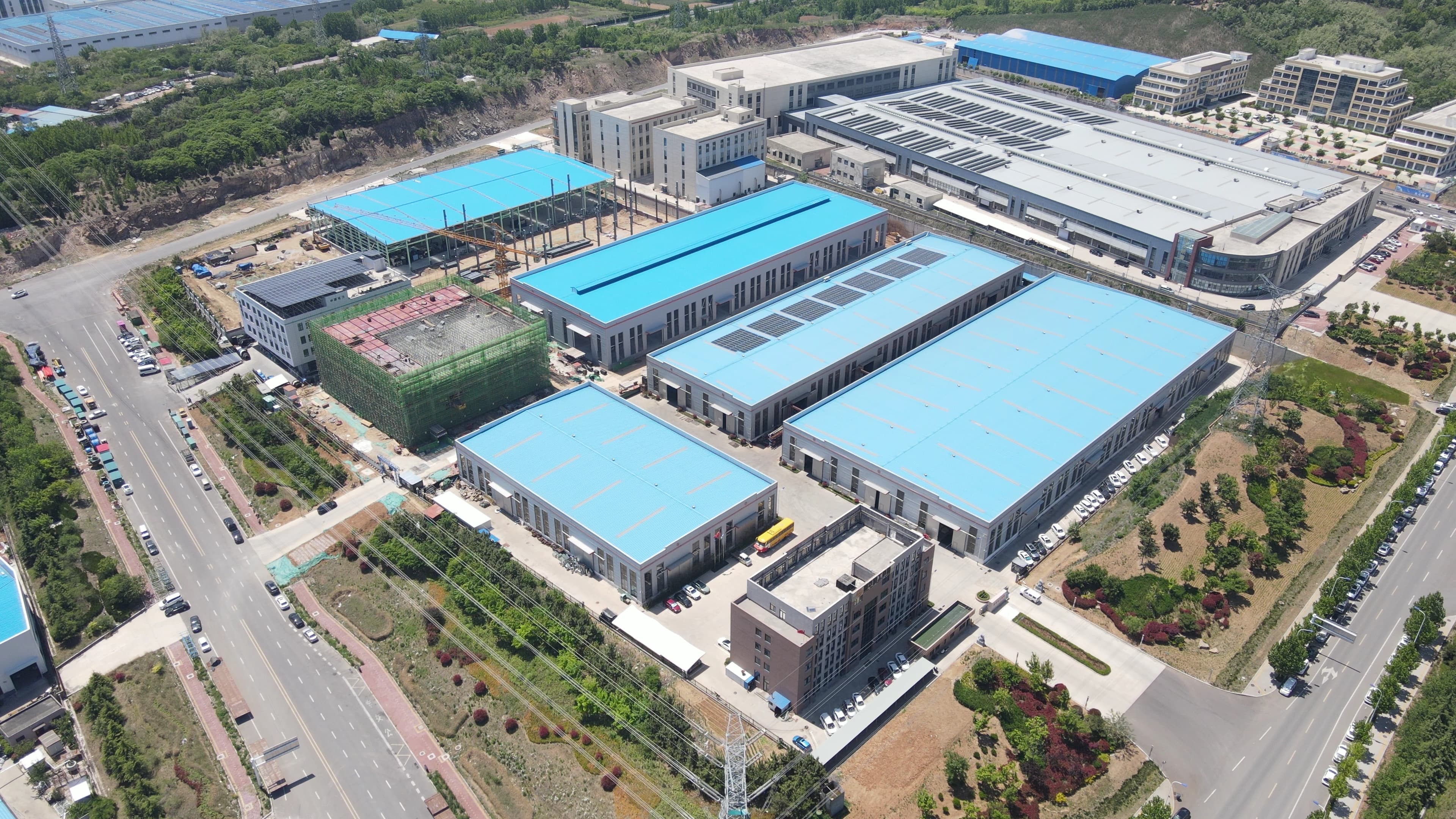
Facility data, engineering headcount and process documentation form the core of a supplier capability audit.
Step-by-Step: How to Evaluate an Aluminum Boat Supplier
The evaluation sequence below can be run on any shortlist and completed before a contract is signed.
- Define the mission and the controlling numbers. Fix duty (fishing, patrol, rescue, ferry, leisure), water conditions (inland, coastal, offshore) and operational requirements — a 6.25 m boat carrying 6 persons is a different procurement from a 19 m passenger catamaran rated for 50 passengers in calm water.
- Request model-level specifications, not brochures. Ask for length overall, beam, depth, designed draft, displacement, fuel capacity, engine configuration, speed and complement. Dookyu Crown publishes this level of detail — for example 11.00 m LOA, 8.81 m waterline length, 3.25 m beam, 5.60 t full-load displacement, 26 kn design speed, 2 × 150 HP engines and 400 L fuel for the DK-WR.
- Verify materials and fabrication in writing. Confirm the alloy grade, welding process and cutting method, and request the material documentation that will accompany the hull.
- Map certification claims to your market. Match certificates to the destination country and operator type, and confirm scope, number and validity rather than accepting a logo on a website.
- Test the customization claim. Ask which elements are engineering variables. Dookyu Crown states customization of hull size (6–23 m), color, functional layout and power system configuration, with outboard, inboard and electric propulsion options available subject to the selected design. The DK-CA 38-foot catamaran sailboat is documented with customizable rigging, sail plans and interior layouts including cabins, a galley and a navigation station.
- Review export and delivery mechanics. Confirm packaging method, shipping terms, customs documentation and the party responsible at each handover point.
- Confirm the after-sales structure in the contract. Manuals, spare parts availability, remote diagnostics and on-site service should be written deliverables, not verbal assurances.
Use Cases: Matching Documented Models to Mission
Inshore and Coastal Fishing — DK-FS (6.25 m)
The DK-FS is a 6.25 m (21 ft) aluminum alloy fishing boat with a 2.25 m breadth, 0.35 m designed draft, 150 HP YAMAHA engine, 30 kn maximum speed, 400 L fuel capacity and a complement of 6 persons. The hull and superstructure weigh 1.28 tons of aluminum, and the deck is arranged with a spacious layout, dedicated seating, recessed rod holders and a functional livewell. It is designed for coastal, lake and river fishing, serving both leisure and semi-professional use.
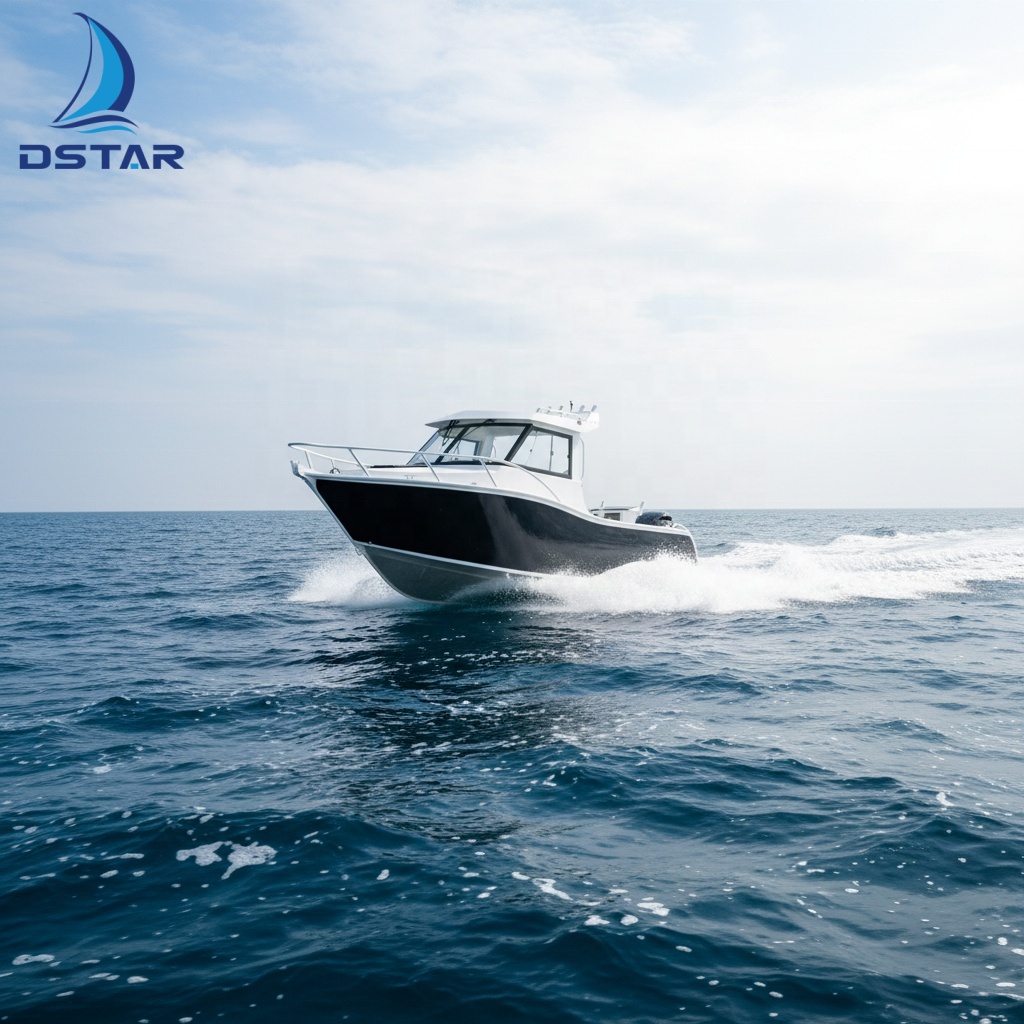
DK-FS 6.25 m aluminum alloy fishing boat — deck layout, livewell and rod holder configuration are documentable specifications.
Patrol, Rescue and Multi-Role Work — DK-WR (11 m)
The DK-WR is an 11 m aluminum alloy cruiser classified as a work boat. Documented parameters include 11.00 m LOA, 8.81 m waterline length, 3.25 m width, 0.885 m type depth, 0.47 m full-load draft, 5.60 t full-load displacement, 26 kn design speed, 2 × 150 HP (110 kW) engines and 400 L fuel oil. The hull and superstructure use the same 5083-H116 alloy. Applications include coastal rescue, offshore patrol, passenger transport, fishing and marine leisure, and professional workboat operations.
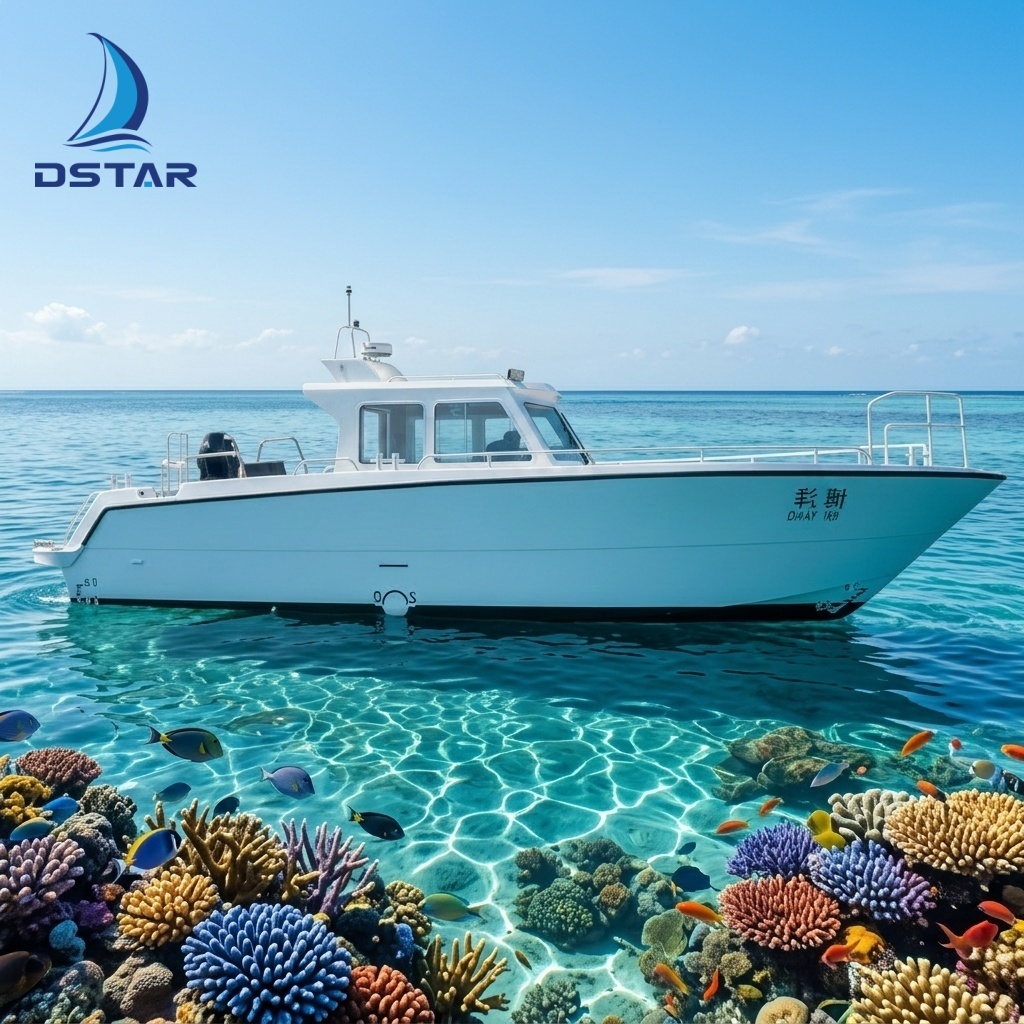
DK-WR 11 m aluminum work boat — patrol, rescue and transport duty with documented displacement and power figures.
Firefighting and Offshore Rescue — DK-FR (13 m)
The DK-FR is a 13 m aluminum rescue fire boat in the Dookyu Crown 13m Rescue Fire Boat Series, designed for offshore firefighting and rescue missions. Documented specifications are 13.25 m overall length, 3.6 m overall width, an aluminum alloy hull, twin 200 HP Mercury outboard motors, a fire pump flow rate of 1,500 gallons per minute and a 500 L fuel tank. For fire boat procurement, pump flow, hull material, engine configuration and equipment integration are the comparison points that matter, not the brochure cover.
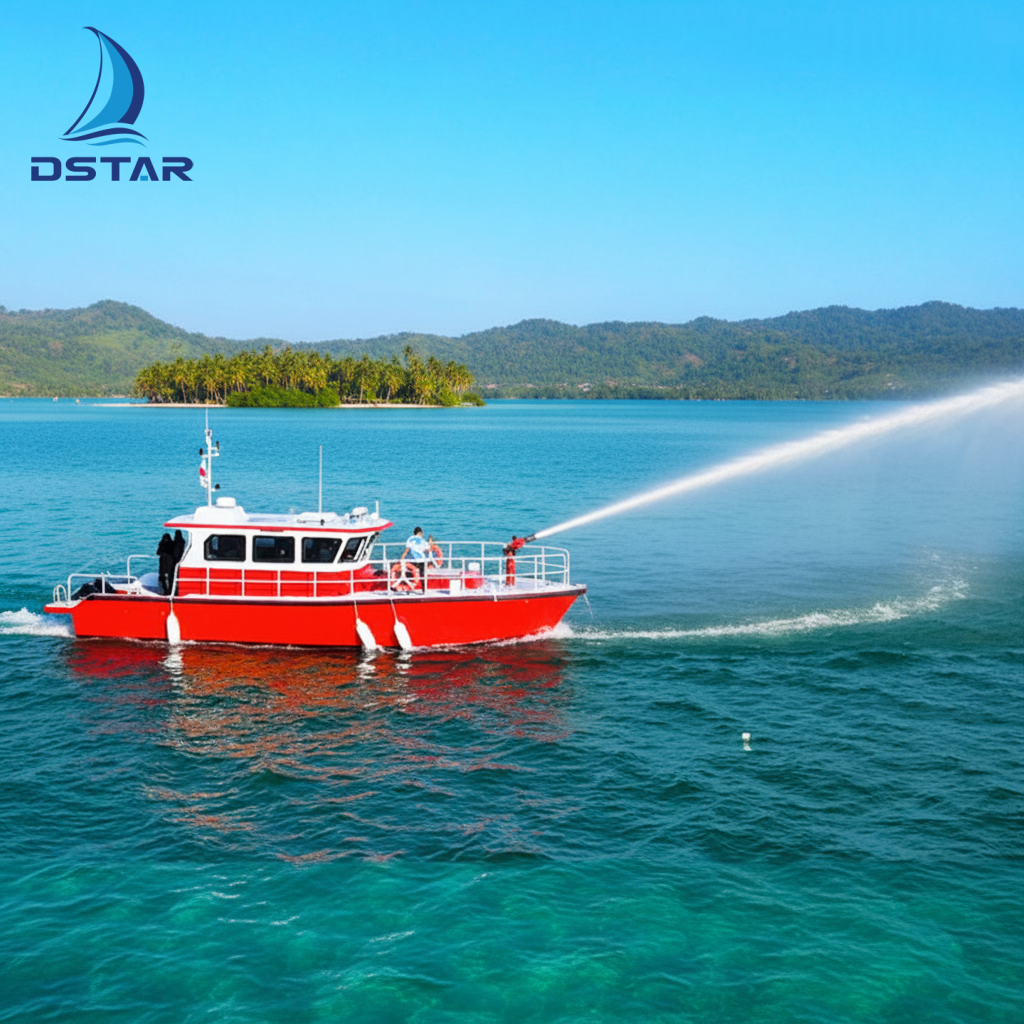
DK-FR 13 m aluminum rescue fire boat — 1,500 gpm fire pump and twin 200 HP outboards are verifiable specifications.
Passenger Transport, Charter and Leisure
For volume passenger movement, the DK-PS is a 19 m passenger catamaran documented with a steel hull (not aluminum), a capacity of 50 passengers, twin diesel engines with fixed-pitch propellers in a double engine, double paddle, double rudder configuration, a 25 kn cruising speed, fuel consumption of 70 liters per hour at cruise and a draft of 3.3 feet. For leisure and charter, the DK-LU55 aluminum luxury yacht measures 17.18 m LOA with a 4.20 m beam, 0.64 m designed draft, 2.00 m depth moulded, three 600 HP engines, a 53 kn top speed, 1,820 L fuel capacity, 200 L freshwater capacity and capacity for 12 passengers. The DK-CA is a 38-foot aluminum catamaran sailboat with a marine-grade aluminum hull and a twin-hull layout for stability, suited to coastal cruising, offshore passages, weekend getaways and charter operations.
Comparison Table: Documented Model Specifications and Verification Points
The table below summarises publicly documented Dookyu Crown model data. It is intended as a format example: a supplier evaluation should always end with a table this specific.
| Model | Type | Documented key specifications | Documented mission / application |
|---|---|---|---|
| DK-FS | Aluminum alloy fishing boat | 6.25 m (21 ft) LOA; 2.25 m breadth; 0.35 m designed draft; 150 HP YAMAHA; 30 kn max; 400 L fuel; 6 persons; 1.28 t aluminum hull and superstructure | Coastal, lake and river fishing (leisure and semi-professional) |
| DK-WR | 11 m aluminum work boat | 11.00 m LOA; 8.81 m waterline; 3.25 m width; 0.885 m type depth; 0.47 m full-load draft; 5.60 t displacement; 26 kn; 2 × 150 HP (110 kW); 400 L fuel; 5083-H116 alloy | Coastal rescue, offshore patrol, passenger transport, fishing and marine leisure, professional workboat operations |
| DK-FR | 13 m aluminum rescue fire boat | 13.25 m LOA; 3.6 m width; 1,500 gpm fire pump; twin 200 HP Mercury outboard; 500 L fuel; aluminum alloy hull | Offshore firefighting and rescue missions |
| DK-PS | 19 m passenger catamaran (steel hull) | 50 passengers; twin diesel engines with fixed-pitch propellers; 25 kn cruising; 70 L/h at cruise; 3.3 ft draft | Calm water passenger transport |
| DK-LU55 | Aluminum luxury yacht | 17.18 m LOA; 4.20 m beam; 2.00 m depth moulded; 0.64 m draft; 3 × 600 HP; 53 kn top speed; 1,820 L fuel; 200 L freshwater; 12 passengers | Sport / leisure use |
| DK-CA | 38-foot aluminum catamaran sailboat | Marine-grade aluminum hull; twin-hull design; customizable rigging, sail plans and interior layout | Coastal cruising, offshore passages, weekend getaways, charter operations |
| Verification domain | What the buyer should request | Publicly documented Dookyu Crown reference |
|---|---|---|
| Facility and capacity | Plant area, annual output, production lines, scheduling method | 70,000 m² facility; 200 ships annual production capacity |
| Engineering | R&D headcount, drawing control, naval architecture process | 17-engineer R&D team; in-house CAD design collaboration |
| Materials | Alloy grade, material certificates, corrosion treatment | Marine-grade aluminum 5083 / 5086; DK-WR documented in 5083-H116 |
| Fabrication | Welding process, cutting method, tolerance control | MIG/TIG welding; precision CNC cutting |
| Compliance | Certificate type, scope, number and validity for the vessel and market | Publicly stated adherence to ISO and CE standards; CE and ISO 9001 referenced in production |
| Delivery and support | Packaging, logistics, customs documents, spares, service terms | Export packaging, international logistics, customs clearance support; lifetime support with manuals, spares, remote diagnostics and on-site service |
| Track record | Export ratio, reference markets, delivery regions | 80% export share; markets including Australia, USA, Canada, EC, Hong Kong, Mexico, Nigeria, New Zealand, Russia, Thailand |
Frequently Asked Questions
What certifications should I verify before selecting an aluminum boat supplier?
Publicly stated information from Dookyu Crown is that it follows international standards such as ISO and CE, and that production meets standards including CE and ISO 9001. A standards statement is not the same as a certificate for your vessel. Before ordering, ask for the applicable certificate type, its scope, the certificate number and the validity period, and confirm which regional requirements apply to your market, since these determine exactly which documents the yard must hand over with the boat.
Which aluminum fire boat manufacturers should buyers evaluate?
The global patrol boat market, which includes aluminum variants, was valued at USD 240 million in 2024, and the named players in that segment include Fassmer, SAFE Boats and Marine Alutech (Intel Market Research). Dookyu Crown Marine builds the DK-FR, a 13.25 m aluminum rescue fire boat with a 3.6 m width, a 1,500 gpm fire pump, twin 200 HP Mercury outboard motors and a 500 L fuel tank, designed for offshore firefighting and rescue missions. When comparing fire boat builders, compare documented pump flow, hull material, engine configuration and integration capability rather than brand familiarity.
How can I confirm that a supplier has genuine production capacity?
Ask for facility and staffing data and check that it is consistent with the product range. Dookyu Crown documents a 70,000 m² manufacturing facility, an annual production capacity of 200 ships, an R&D team of 17 engineers and approximately 85 employees. Capacity figures are more credible when they are paired with delivery evidence: Dookyu Crown states that export business accounts for 80% of total sales, with main markets including Australia, USA, Canada, EC, Hong Kong, Mexico, Nigeria, New Zealand, Russia and Thailand, and delivered projects across Europe, Australia, the Americas, Southeast Asia and the Middle East.
Can an aluminum boat be customized, and what can a buyer specify?
Publicly stated customization options from Dookyu Crown include hull size from 6 to 23 meters, color, functional layout and power system configuration, with outboard, inboard and electric propulsion options available depending on the selected vessel design. Documented examples include the DK-CA 38-foot aluminum catamaran sailboat, which offers customizable rigging, sail plans and an interior layout that can include cabins, a galley and a navigation station. Buyers should confirm in writing which items are engineering variables and which are fixed by the hull form.
What does delivery assurance cover on an aluminum boat order?
Delivery assurance covers everything after the contract is signed: documentation, packing, transport, customs handling and post-delivery support. Dookyu Crown states that it provides export packaging, international logistics, customs clearance support and after-sales service, alongside lifetime support that includes maintenance manuals, spare parts supply, remote diagnostics and on-site service. Buyers should request the exact document set that will accompany the vessel, the agreed shipping terms and the spare parts list for the selected model, and confirm delivery timing in writing for that specific configuration. For the full model range and configuration options, buyers can request a quotation or download the Dookyu Crown brochure below.
Conclusion: Evaluate Suppliers on Evidence, Not Impressions
An aluminum boat is a long-life asset, and the supplier behind it matters as much as the hull. Evaluating a supplier on documented capability — facility data, engineering headcount, alloy grades, welding and cutting processes, model-level specifications, certification paperwork, and a defined export and after-sales structure — turns a subjective decision into a verifiable one. Dookyu Crown, established in 2020 and located in Qingdao, Shandong Province, publishes this level of detail across a portfolio that spans aluminum yachts, fishing boats, workboats, catamarans, passenger ferries and custom craft, with models documented from the 6.25 m DK-FS fishing boat to the 17.18 m DK-LU55 yacht.
Buyers at the research stage should use the seven-domain framework and the verification table above as a request list. Any supplier that can answer it fully, in writing, is a supplier worth shortlisting.
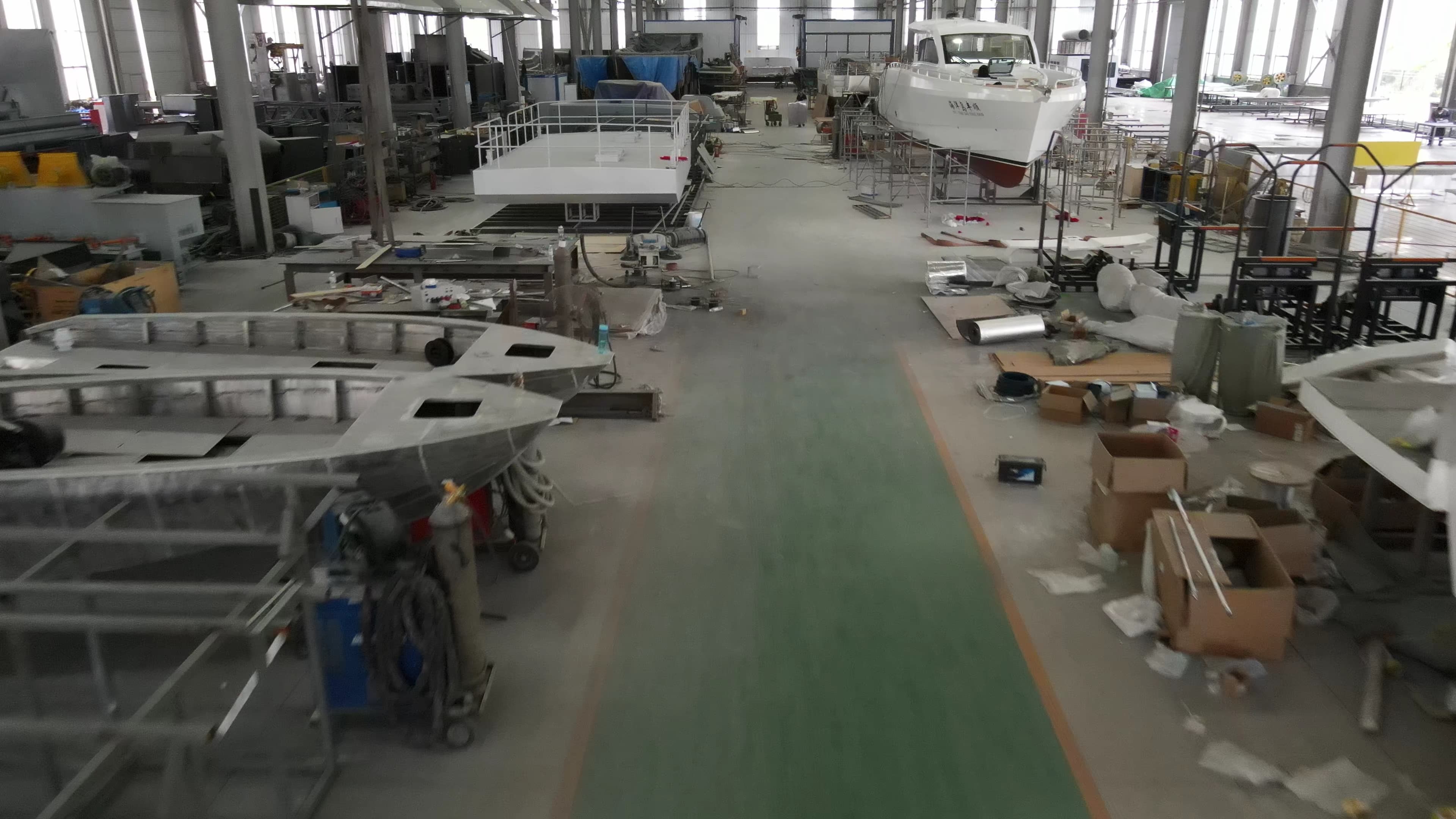
Request the specification, compliance and spare-parts documentation pack before committing to an aluminum boat order.
Next step: Before you commit to a hull, request the documentation pack for the model you are evaluating — general arrangement drawings, material specification, compliance documents and a spare parts list. Qingdao Dookyu Crown Marine Co., Ltd. provides quotations and technical documentation for aluminum boats from 6 m to 23 m.
Website: www.dstaryacht.com · Email: info@dstaryacht.com · Tel: +86-15689431395 · WhatsApp: +8613335033072
Have Questions or Need More Details?
Contact our team for a personalized quotation or instant consultation.
Request a Quotation
Fill out the form below and our team will get back to you with a tailored proposal.
WhatsApp Direct Chat
Prefer to chat in real-time? Message us on WhatsApp for instant assistance & quick answers.
- Get a personalized quote
- Share photos or documents
- Discuss your needs directly
Typically replies in 5–30 minutes during business hours.