How to Match an Aluminum Boat to Your Mission: Fire, Patrol, Ferry, Fishing and Workboat
How to Match an Aluminum Boat to Your Mission: Fire, Patrol, Ferry, Fishing and Workboat
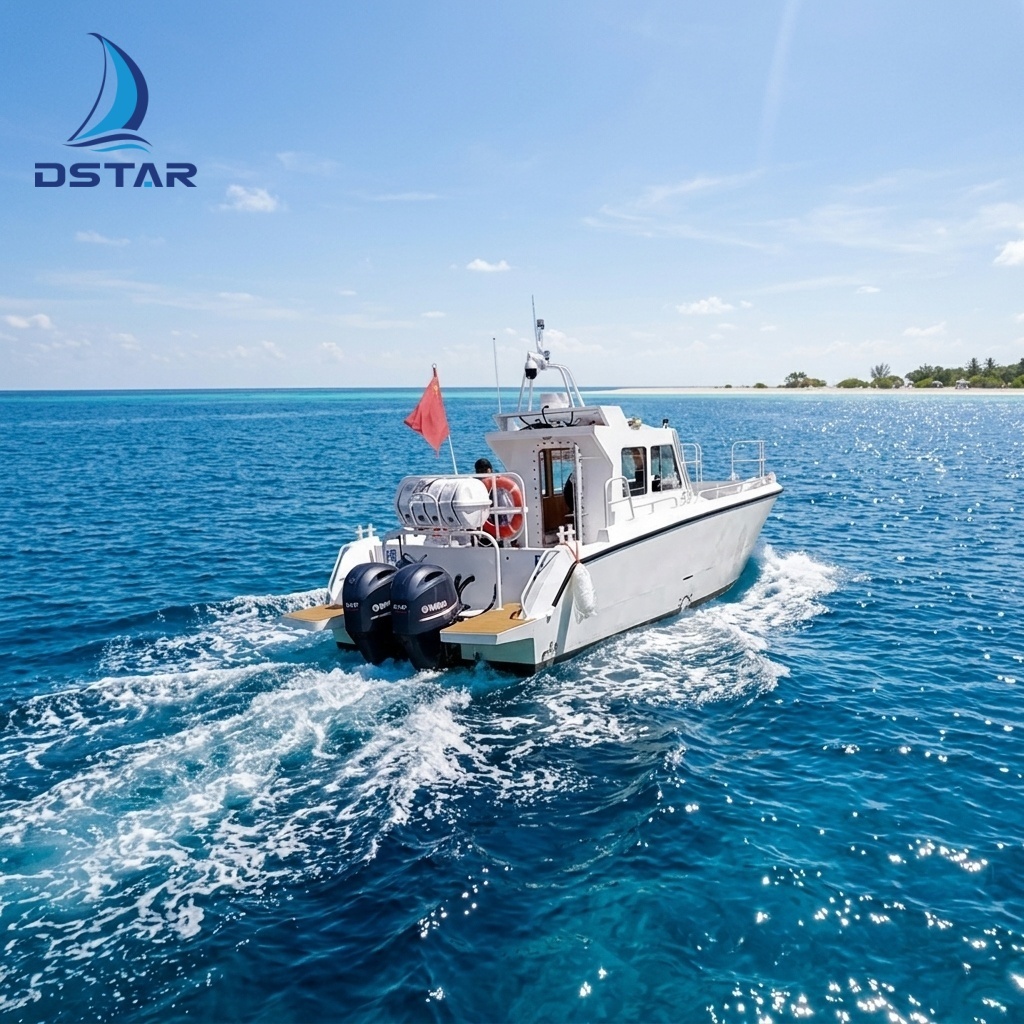
Aluminum boats are not a single product category. They are a hull material applied across fire boats, patrol boats, pilot boats, fishing vessels, passenger ferries, workboats and yachts. The correct purchase decision starts with the operating mission: what the vessel must carry, where it will run, and how fast it must respond. This guide explains how to match an aluminum boat to a specific scenario, with product examples and manufacturing capabilities from Qingdao Dookyu Crown Marine Co., Ltd.
Qingdao Dookyu Crown Marine Co., Ltd. is a shipyard in Qingdao, Shandong Province, founded in 2020. The company designs and builds high-performance aluminum alloy boats and vessels for customers in Europe, Australia, the Americas, Southeast Asia and the Middle East. Its product range includes fishing boats, workboats, patrol and rescue vessels, fire boats, catamarans, passenger ferries and luxury yachts.
The Core Problem: Buying a Hull Before Defining the Mission
Mission requirements are often defined after hull selection. Many procurement conversations start with price or length before asking what the boat will actually do on the water. That order creates risk. A patrol boat for anti-smuggling duties needs navigation and communication gear plus high-speed maneuvering; a municipal fire boat needs fire monitors and pump capacity; a passenger ferry needs seating, stability and shallow draft; a commercial fishing boat needs deck space, livewells and rod holders. When the boat does not match the scenario, the operator pays for retrofits or operates below capability. Mission-first specification is therefore the core of aluminum boat procurement.
Typical operating scenarios follow a fairly consistent pattern across markets. Vessels run in inland waters such as rivers, lakes and reservoirs; in coastal and offshore waters including nearshore zones and inter-island routes; and in open ocean conditions. Mission functions include law enforcement and security, transport and operations, rescue and firefighting, leisure and tourism, and research and monitoring. Each function changes the hull, deck, propulsion and equipment package.
Industry Background: Why Aluminum Vessels Are Expanding Across Missions
The aluminum vessel segment is sizeable and growing. Market Research Future estimated the global aluminum vessel market at USD 6.145 billion in 2024, with a projected CAGR of 4.21% from 2025 to 2035. Global Market Insights valued the aluminum fishing boat market at USD 1.7 billion in 2024, and Intel Market Research estimated the global patrol boat market at USD 240 million in 2024. North America held the largest share of the aluminum fishing boat market in 2024. According to Stratview Research, aluminum fishing boats are preferred over fiberglass for freshwater fishing because of weight and cost benefits.
Within fishing boats, deep-V hulls are expected to account for 32.6% of the aluminum fishing boat market in 2025, reflecting demand for better seakeeping in larger inland and coastal waters. In passenger transport, lightweight aluminum hulls are a documented technology direction: Straits Research reports that Incat Tasmania is constructing next-generation lightweight aluminum passenger ferries to improve fuel efficiency in 2025. The same material family therefore appears across fire boats, patrol boats, ferries, fishing boats and yachts because marine-grade aluminum alloys such as 5083 and 5086 offer a lightweight, corrosion-resistant structure that suits both speed and durability requirements.
Detailed Solution: A Mission-First Framework for Aluminum Boat Selection
The specification process can be reduced to five decision blocks. Each block changes the boat design, so each should be answered before production starts.
1. Operating Environment
Inland waters such as rivers, lakes and reservoirs place a premium on shallow draft, maneuverability and corrosion resistance. Coastal and offshore waters add demands on hull strength, range and seakeeping. Open ocean operations raise the requirement for structural redundancy, larger fuel capacity and higher-grade navigation equipment.
2. Primary Function
Law enforcement and security calls for patrol, surveillance and anti-smuggling capability. Transport and operations calls for personnel or cargo capacity. Rescue and firefighting requires emergency response features and fire suppression systems. Leisure and tourism favors comfort and layout. Research and monitoring requires space for instruments and data collection. A single boat can be configured for several functions if the design anticipates modular or multi-role equipment.
3. Operation Mode
High-speed maneuvering is common in patrol and fire response profiles, with some aluminum vessels designed for speeds up to 50+ knots. Multi-mission switching is supported by modular designs that allow rapid role changes. Autonomous or unmanned operation is also a stated application area for specialized aluminum craft used in research and surveillance work.
4. Supporting Equipment
The equipment list drives the deck and system design. Propulsion systems typically range from outboard or inboard engines of 50HP to 300HP+. Navigation and communication packages include radar, chartplotters and VHF radios. Operational equipment may include fire monitors, winches, cranes and livewells. Electrical systems cover batteries, generators and solar panels where low-emission operation is required.
5. Special Requirements
Government and specialized applications often require international certifications such as CE, CCS and SOLAS compliance. Customized design is expected for tailored hulls, layouts and equipment. Corrosion protection and durability are handled through marine-grade aluminum and anti-corrosion treatments. Environmental and energy-efficiency goals are met with electric or hybrid propulsion and lightweight design.
Dookyu Crown Marine applies this framework when a customer asks for a boat. The company's stated customization options cover hull dimensions and structure, hull type (monohull, catamaran, trimaran), deck layout, wheelhouse position, engine brand and type, propulsion system, fuel/electric/hybrid power options, fuel and water tank capacity, firefighting equipment, cranes and winches, fishing gear and livewells, passenger seating configuration, interior design style, lighting, galley and sanitary equipment, hull color and paint finish, custom logos and decals, navigation and communication systems, electrical system and solar panels, automation and control systems, certification level (CE/CCS/SOLAS), safety and lifesaving equipment, bimini tops and outdoor accessories, and packaging and shipping solutions.
Step-by-Step: How to Specify a Mission-Fit Aluminum Boat
- Define the operating scenario. Write down the water type, operating range, passenger or crew count, and response-time requirements. This becomes the basis for length, draft, tankage and speed decisions.
- Select the hull configuration. A monohull is commonly chosen for open-water stability; a catamaran is often selected for shallow, calm routes with larger deck space. Dookyu Crown's range includes both configurations.
- Choose the propulsion system. Outboard or inboard engines from 50HP to 300HP+ are common for aluminum workboats and rescue craft. The builder also offers diesel, electric and hybrid propulsion options depending on the vessel design.
- List the mission equipment. Fire boats need fire monitors and pump capacity; patrol boats need radar and communication systems; fishing boats need livewells and rod holders; workboats may need cranes, winches or passenger seating.
- Confirm certification requirements. For government and export projects, verify whether CE, CCS or SOLAS compliance is required, and confirm the certificate scope, number and validity before ordering.
- Verify the builder's manufacturing and quality-control capability. Check welding standards, material traceability, inspection procedures, sea-trial practice, production capacity and delivery lead time.
Use Cases: Aluminum Boat Configurations Across Real Missions
Use Case 1: Municipal Fire and Rescue Fleets
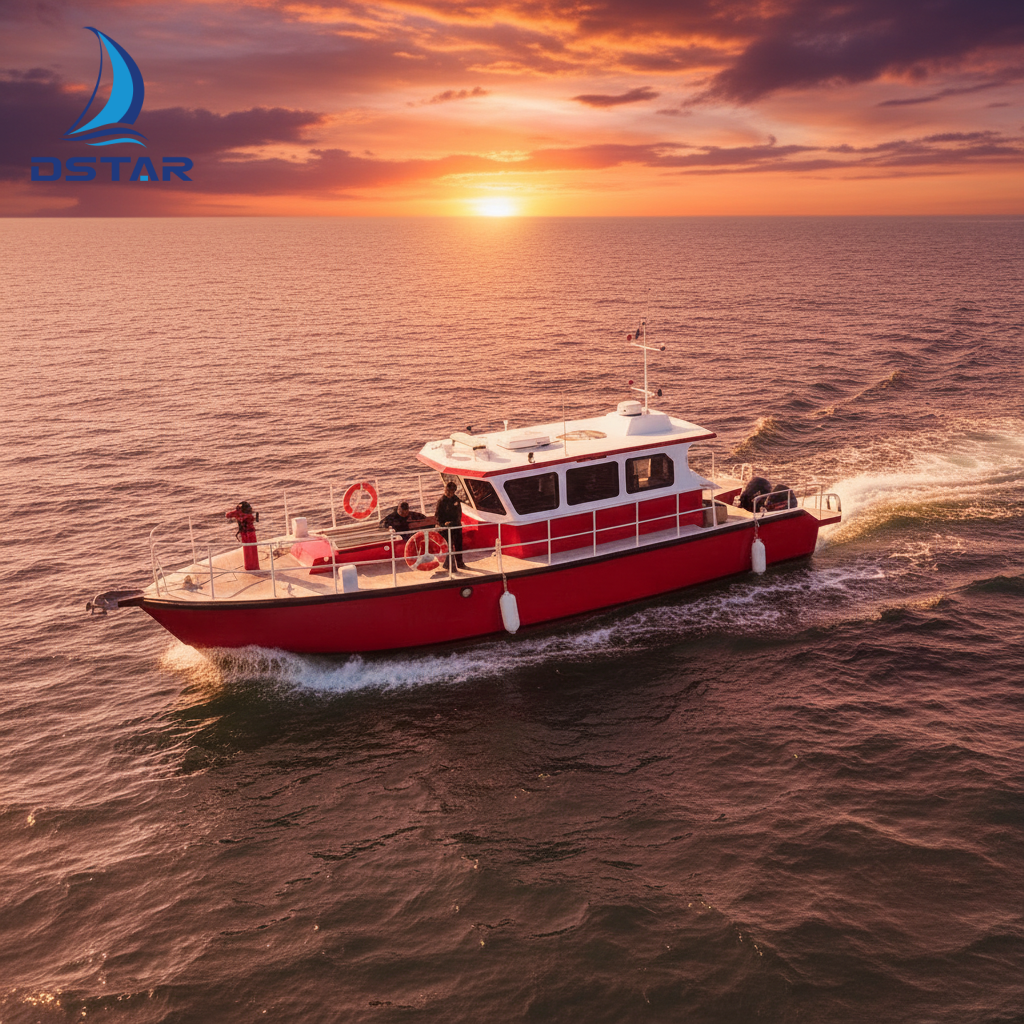
For municipal and government rescue fleets, the 13.25m Aluminum Rescue Fire Boat (model DK-FR) is a direct configuration example. It is built with an aluminum alloy hull for offshore firefighting and rescue missions. Standard specifications include twin 200HP Mercury outboard engines, a 500L fuel tank and a fire pump flow of 1500 GPM. The manufacturer states that the vessel is suitable for government and public projects such as patrol, firefighting and environmental monitoring. One unit has been delivered to an international customer in Ecuador for offshore firefighting and rescue. According to the case record, the project achieved high-performance firefighting, rapid response and stable maritime operations, and it addressed the problem of inadequate offshore firefighting and rescue capability.
Use Case 2: Patrol and Law Enforcement
Aluminum boats used in the government and law enforcement industry support patrol, anti-smuggling and fisheries inspection. The 11m Aluminum Alloy Cruiser Boat (model DK-WR), built from 5083-H116 aluminum alloy, is one configuration designed for coastal rescue, offshore patrol, passenger transport, fishing and marine leisure, and professional workboat operations. With two 150HP outboards and a design speed of 26 knots, it carries GPS, VHF and AIS for real-time positioning and collision-avoidance warning. The boat also includes dual fuel quick-close valves, an automatic bilge pump, portable CO₂ and dry-powder fire extinguishers, six life jackets and two life buoys. The light, high-strength hull is intended to reduce maintenance costs while delivering the speed and stability needed for coastal patrol work.
Speed is a recurring patrol requirement. Some Dookyu Crown vessels are designed for high-speed maneuvering at up to 50+ knots, and the 17m luxury yacht reaches a top speed of 53 knots using three 600HP engines. That range shows the speed envelope available when response time is the defining mission parameter.
Use Case 3: Passenger Ferry and Island Transport
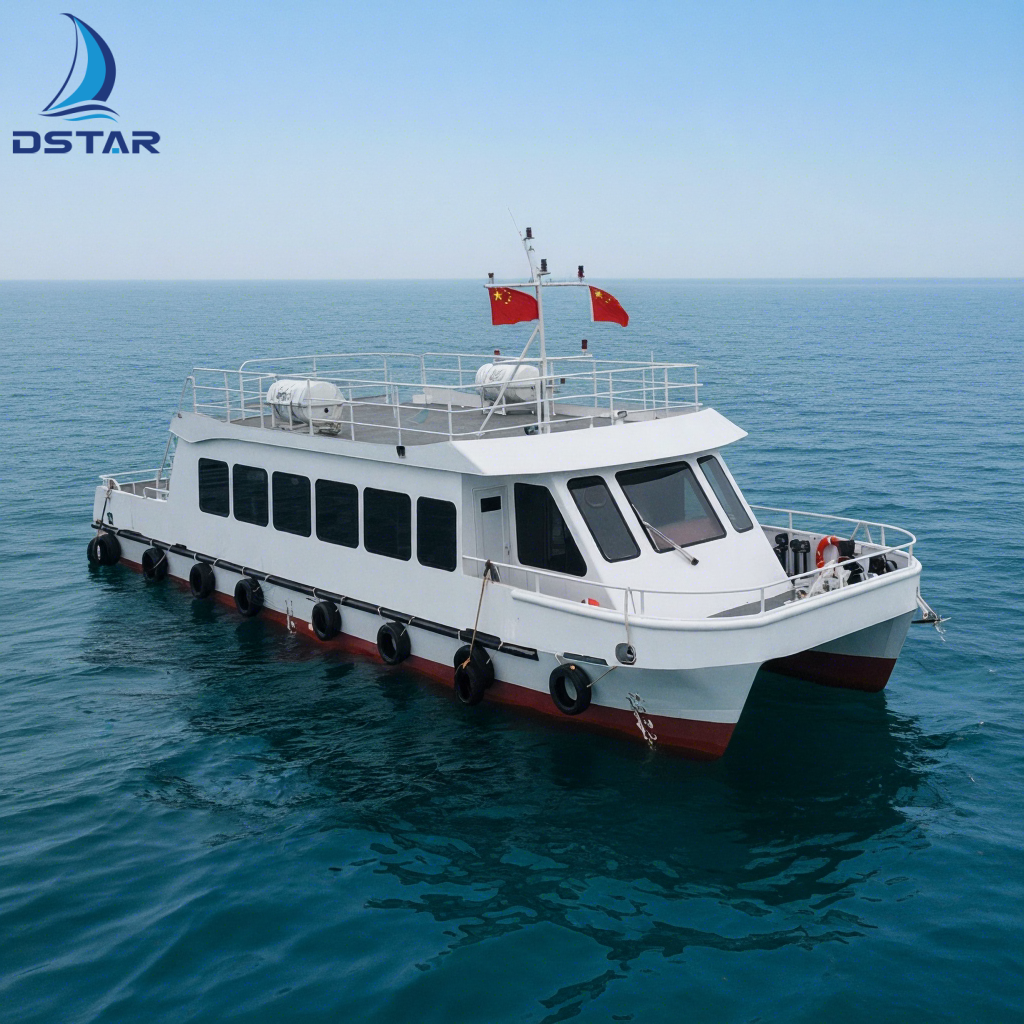
For passenger routes, the 19m Passenger Catamaran Boat (model DK-PS) is designed for calm-water passenger transport. It carries 50 passengers with twin diesel engines and fixed-pitch propellers in a double-engine, double-paddle, double-rudder configuration. Cruising speed is 25 knots, and the 3.3-foot draft allows access to shallow piers. The vessel is arranged for daily commercial operations, with heavy-duty rub rails, commercial-grade lighting and tool-less access to filters and belts. Operators running island or sheltered-water routes can use this configuration where shallow draft and repeatable daily schedules matter more than open-ocean capability.
Use Case 4: Commercial and Sport Fishing
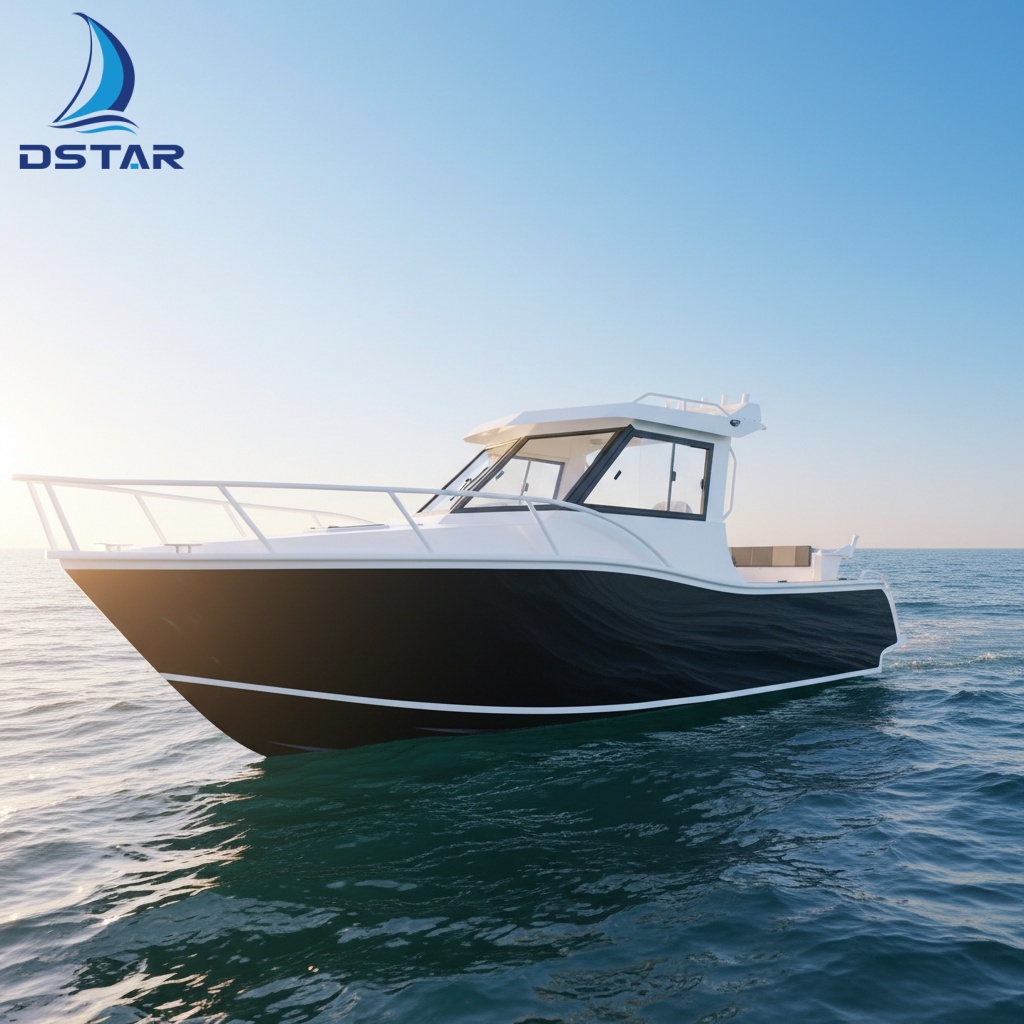
The 6.25m Aluminum Alloy Fishing Boat (model DK-FS) targets anglers who need corrosion resistance and lightweight strength in fresh and salt water. With a 150HP Yamaha outboard, maximum speed of 30 knots, 400L fuel capacity and accommodation for 6 persons, it is configured for coastal, lake and river fishing. The deck includes a functional livewell, recessed rod holders and dedicated seating. The same aluminum platform logic extends to bass boats, crabbing boats, diving boats, river boats and offshore fishing boats: choose deck layout, tankage and outfitting to match the target water and catch.
Use Case 5: Workboat and Utility Operations
Workboats are often required to switch roles within a single operating season. The 11m DK-WR is configured for coastal rescue, offshore patrol, passenger transport, fishing and marine leisure, and professional workboat operations. Practical features include an EVA imitation teak non-slip floor, soft seating for long trips, a remote-control searchlight, tachometer, oil level gauge, DC distribution board, battery charger and shore power socket. This configuration suits operators who need one hull for several daily or seasonal functions while keeping maintenance simple.
Use Case 6: Leisure, Charter and Luxury
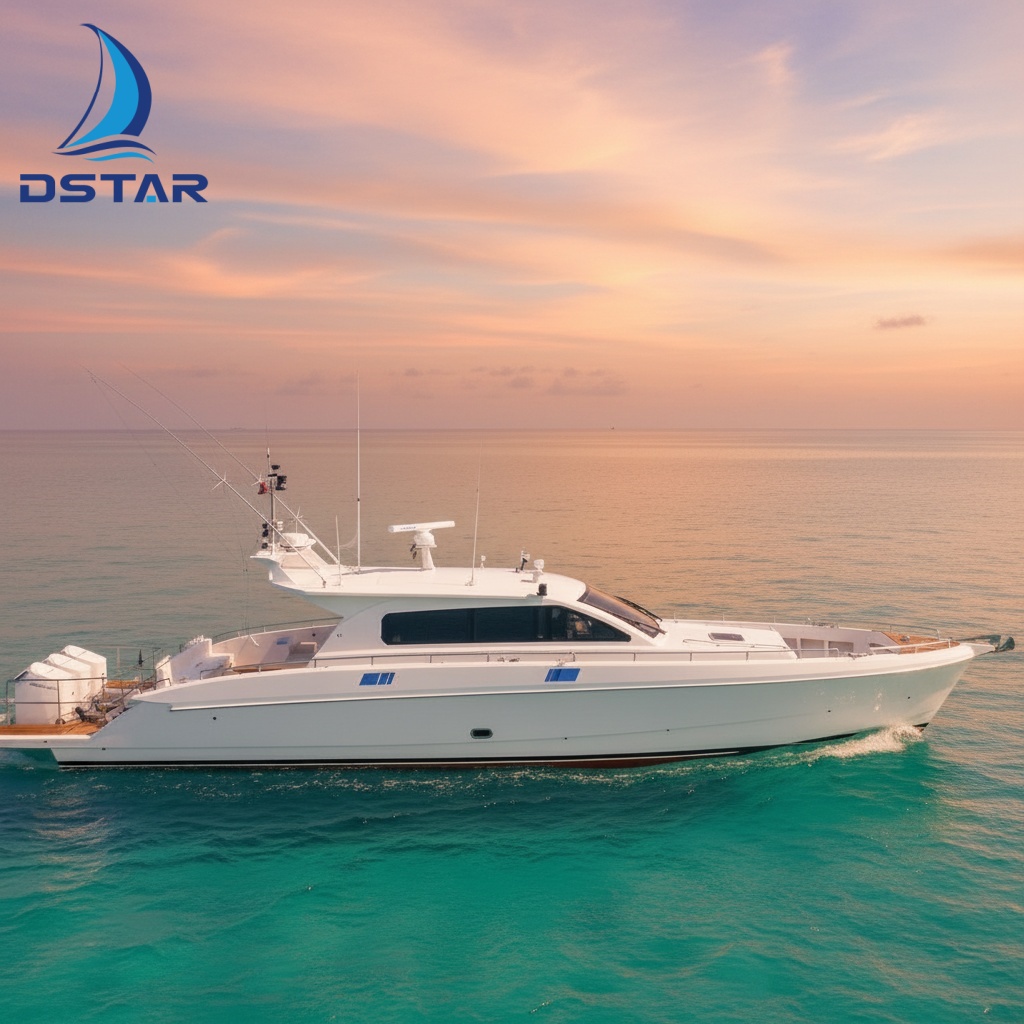
For charter operators and private owners, the 38-foot Catamaran Aluminum Sailboat (model DK-CA) offers a twin-hull marine-grade aluminum design with customizable cabins, galley and navigation station. It is suited to coastal cruising, offshore passages, weekend getaways and charter operations, with customizable rigging and sail plans. On the motor-yacht side, the 17m Aluminum Luxury Yacht (model DK-LU55) carries 12 passengers with three 600HP engines, a top speed of 53 knots, a 1820L fuel tank and 200L freshwater capacity. The interior is arranged for business reception with two independent reception areas, and the lower deck contains a bedroom, crew room, kitchen and activity room.
Comparison Table: Dookyu Crown Aluminum Boat Models by Mission
| Model | Mission Fit | Length | Speed | Propulsion | Key Mission Equipment |
|---|---|---|---|---|---|
| DK-FR 13m Rescue Fire Boat | Offshore firefighting and rescue; government and public projects | 13.25m | Not publicly stated | Twin 200HP Mercury outboards | 1500 GPM fire pump, 500L fuel tank, aluminum alloy hull |
| DK-WR 11m Aluminum Alloy Cruiser Boat | Coastal rescue, offshore patrol, passenger transport, fishing, workboat operations | 11.00m | 26 kn design | 2 × 150HP outboards (300HP total) | GPS, VHF, AIS, dual fuel quick-close valves, bilge pump, life jackets and buoys |
| DK-FS 6.25m Aluminum Alloy Fishing Boat | Coastal, lake and river fishing | 6.25m | 30 kn max | 150HP Yamaha outboard | Livewell, recessed rod holders, 400L fuel, 6 persons |
| DK-PS 19m Passenger Catamaran Boat | Calm-water passenger transport | 19m | 25 kn cruise | Twin diesel, fixed-pitch propellers | 50 passengers, 3.3 ft draft, double-engine/double-paddle/double-rudder configuration |
| DK-CA 38-foot Catamaran Aluminum Sailboat | Coastal cruising, offshore passages, charter operations | 38 ft (approx. 12m) | Not publicly stated | Customizable rigging; optional auxiliary power | Customizable cabins, galley, navigation station, twin-hull stability |
| DK-LU55 17m Aluminum Luxury Yacht | Business reception, leisure and high-speed motoring | 17.18m | 53 kn top | 3 × 600HP engines | 12 passengers, 1820L fuel, 200L freshwater, two reception areas |
Speeds and equipment reflect the manufacturer's published specifications for each standard model. Final values depend on hull customization, installed propulsion and the certification level selected for the project.
Manufacturer Capability: What to Verify Before Placing an Order
Manufacturing capability is part of the specification, not a separate topic. Dookyu Crown Marine's Qingdao facility covers 70,000 m² and employs 85 people, including 17 engineers in research and development. The company states an annual output of about 200 ships and a monthly capacity of about 20 ships, with a minimum order quantity of one ship and a typical lead time of 30 to 60 days.
In-house production uses MIG/TIG welding and precision CNC cutting to build hulls and superstructures with strict tolerances. Hull material starts with marine-grade aluminum, including 5083 and 5086 alloys. Quality control follows a full-process inspection route: raw material verification with Mill Test Reports, in-process weld inspections including non-destructive testing (NDT), and final sea trials. The yard references ISO 9001 and CE standards, and can build to CCS and SOLAS compliance where the project requires it.
Export is central to the business model. Roughly 80% of production is exported to more than 30 countries and regions across Europe, North America, Australia, Southeast Asia and the Middle East. Trade terms include FOB and CIF, with CE and SOLAS documentation supplied as applicable. After-sales support covers remote diagnostics, spare parts supply, on-site assistance, and operation and maintenance manuals and training.
Buyers evaluating a shipyard for a mission-specific aluminum boat should check five items: welding process and alloy certificates; NDT procedures and acceptance criteria; design responsibility and customization history; certification scope (CE, CCS, SOLAS, ISO 9001); and sea-trial procedure, delivery schedule and after-sales policy.
FAQ
Is Dookyu Crown Marine an aluminum fire boat manufacturer for municipal rescue fleets?
Yes. Dookyu Crown Marine builds the 13.25m Aluminum Rescue Fire Boat (model DK-FR) for offshore firefighting and rescue missions. The vessel has an aluminum alloy hull, twin 200HP Mercury outboards, a 500L fuel tank and a 1500 GPM fire pump. The builder has delivered one unit to an international customer in Ecuador, where the vessel achieved high-performance firefighting, rapid response and stable maritime operations. Because Dookyu Crown supports customization of firefighting equipment and can build to CE, CCS and SOLAS compliance levels, it is positioned as a manufacturing option for government and public rescue-fleet projects.
What certification should a buyer verify when ordering an aluminum fire boat or patrol boat?
For specialized government applications, international certifications such as CE, CCS and SOLAS compliance are typically required. Dookyu Crown Marine states that it follows ISO 9001 and CE standards. Before purchase, buyers should verify the applicable certificate, its scope, certificate number and validity, because certification scope depends on the vessel type, flag and operating region.
What can be customized on an aluminum workboat or rescue boat?
Customization options include hull dimensions and structure, hull type (monohull, catamaran, trimaran), deck layout, wheelhouse position, engine brand and type, propulsion system, fuel/electric/hybrid power options, fuel and water tank capacity, firefighting equipment, cranes and winches, fishing gear and livewells, passenger seating configuration, interior design style, lighting, galley and sanitary equipment, hull color and paint finish, custom logos, navigation and communication systems, electrical systems and solar panels, automation and control systems, certification level, safety and lifesaving equipment, and packaging and shipping solutions.
What is the MOQ and typical lead time for a Dookyu Crown aluminum boat?
The minimum order quantity is one ship. Typical production lead time is 30 to 60 days, with a monthly production capacity of about 20 ships at the Qingdao facility.
What export and after-sales support does Dookyu Crown provide?
Dookyu Crown provides export packaging, international logistics, customs clearance support and after-sales service. Trade can be arranged on flexible terms such as FOB and CIF, with multilingual communication support. After delivery, the company offers remote diagnostics, spare parts supply, on-site assistance, and operation and maintenance manuals and training. To request a vessel specification or quotation, contact Dookyu Crown Marine at info@dstaryacht.com or WhatsApp +86 13335033072; a company brochure is available for download.
Conclusion
Mission definition decides hull form, speed range, equipment and certification. Aluminum's combination of light weight and corrosion resistance makes it a practical material across fire boats, patrol boats, passenger ferries, fishing boats, workboats and yachts. Qingdao Dookyu Crown Marine covers that full range from one facility, with customized design, validated production processes and direct export support. Starting with the operating scenario, then selecting hull, propulsion, mission equipment and certification, gives buyers a repeatable path to a vessel that matches the work it will actually do.
Next step: turn your mission into a specification.
Download the Dookyu Crown Marine brochure to review the product range and manufacturing capabilities, or contact the yard directly for a project-based quotation.
Download Company Brochure | Visit Official Website | Chat on WhatsApp
Email: info@dstaryacht.com | Contact Person: Bruce Liu | Tel: +86-15689431395

Have Questions or Need More Details?
Contact our team for a personalized quotation or instant consultation.
Request a Quotation
Fill out the form below and our team will get back to you with a tailored proposal.
WhatsApp Direct Chat
Prefer to chat in real-time? Message us on WhatsApp for instant assistance & quick answers.
- Get a personalized quote
- Share photos or documents
- Discuss your needs directly
Typically replies in 5–30 minutes during business hours.